Chase, what made you leave your day job and start a watch company in Chicago?
I was a commercial real estate consultant at a Big Four accounting firm. It was a really corporate environment and it just wasn't me. Very little freedom, very little room to build anything of my own. Don't get me wrong, it was a great company and I had great co-workers. I just wasn't inspired. And I wanted a better work-life balance. I wanted to take control of my own schedule and projects.
I'd been obsessed with watches for years, and the push came over some bourbon with my dad at Thanksgiving. I'd made some prototypes and was at a crossroads: either shelve the project or move forward. So I asked him for advice. He looked at me and asked, "What would you tell your future kids? Play it safe or take a risk?" The answer was pretty obvious.
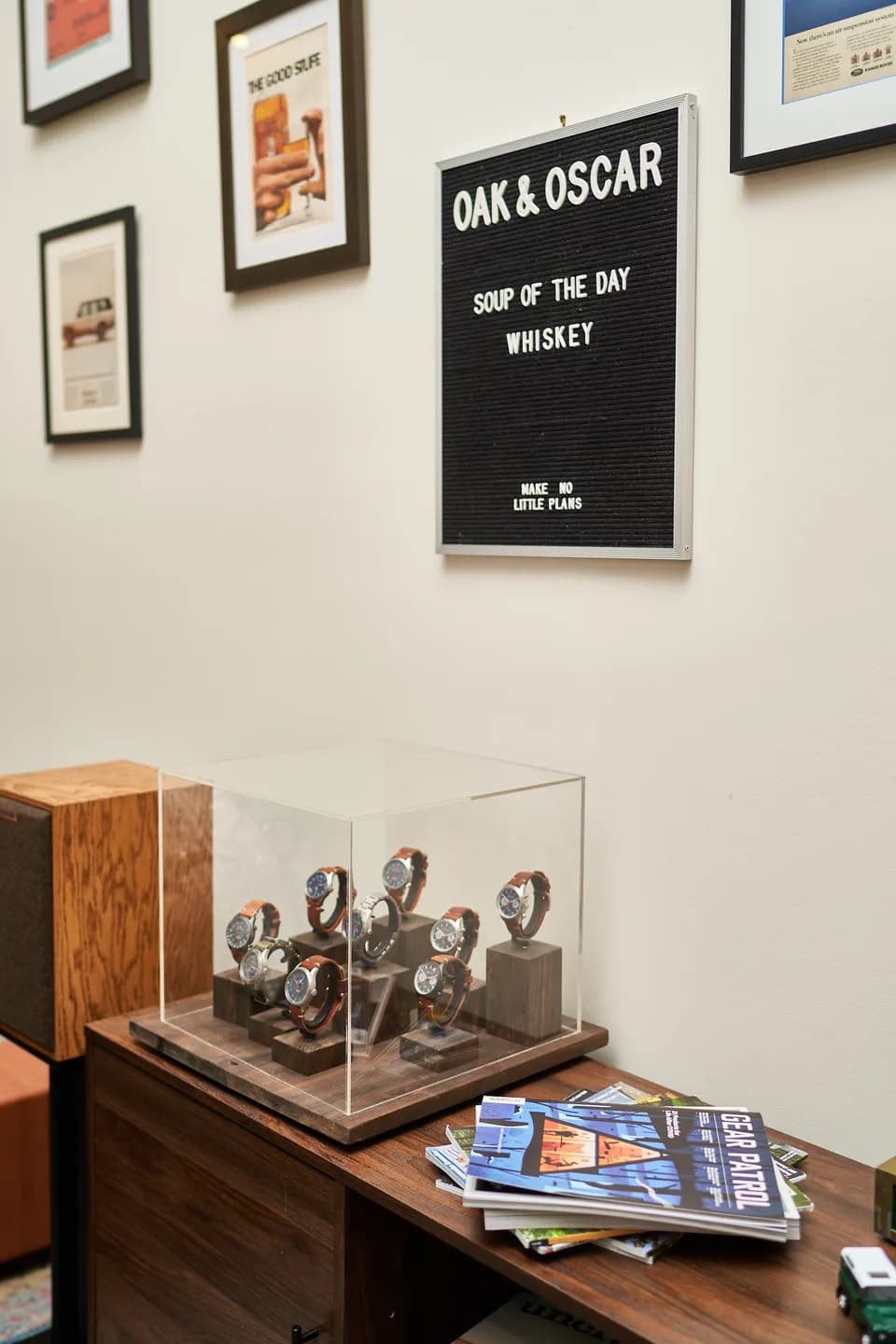
Chicago was never a question. It's home. We launched in May 2015 with the Burnham, named for Daniel Burnham, and his line "Make no little plans" became our motto.
Tell us the story behind the name Oak & Oscar.
It's two of the things I love most. The "Oak" is for the oak barrels that give bourbon and whiskey their character. I've been a bourbon guy for a long time, and that patience, that idea that time makes something better, felt right for a watch company.
The "Oscar" is my dog, the dog that inspired the brand and will forever be our mascot. We lost him in late 2025, and the name means even more now. He was part of this from day one.
Your collaboration with FEW Spirits has a barrel-cut caseback and comes with a bottle. How did that project come together?
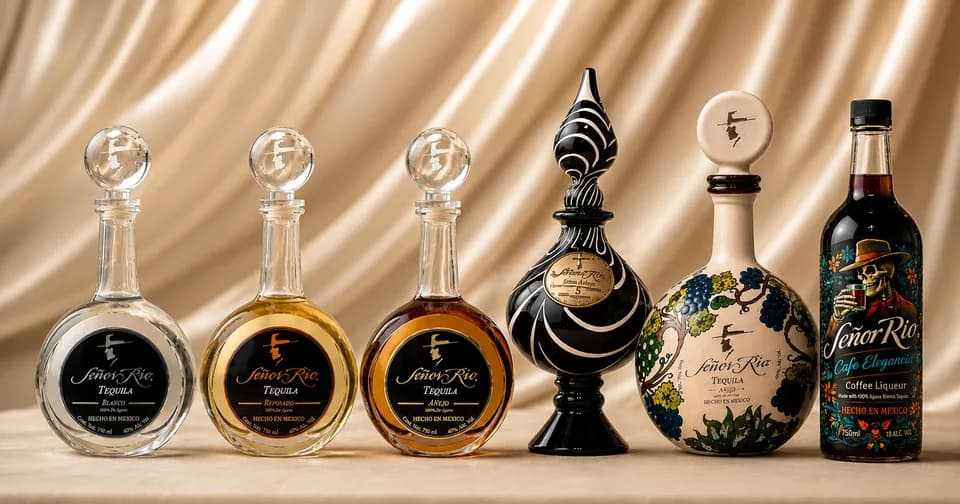
It started the way a lot of good things do: over a pour. Paul Hletko, FEW's founder and master distiller, and I have been friends for years. We've held a bunch of tastings at FEW, and their bottles have always had a spot on our shelf at HQ.
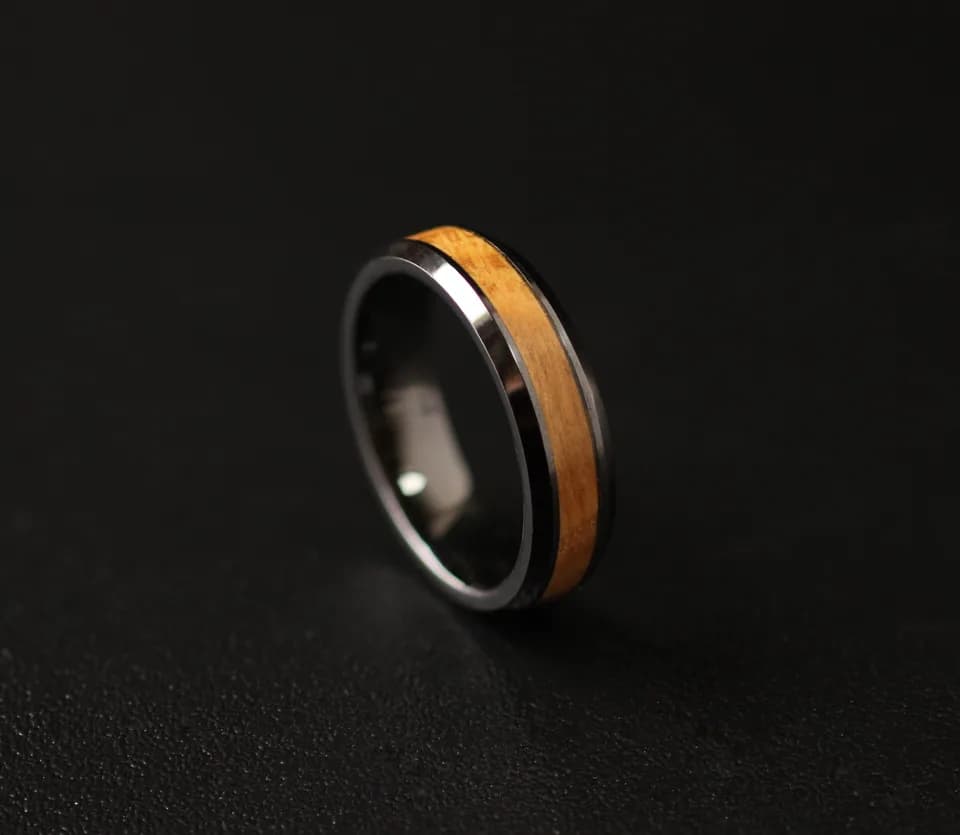
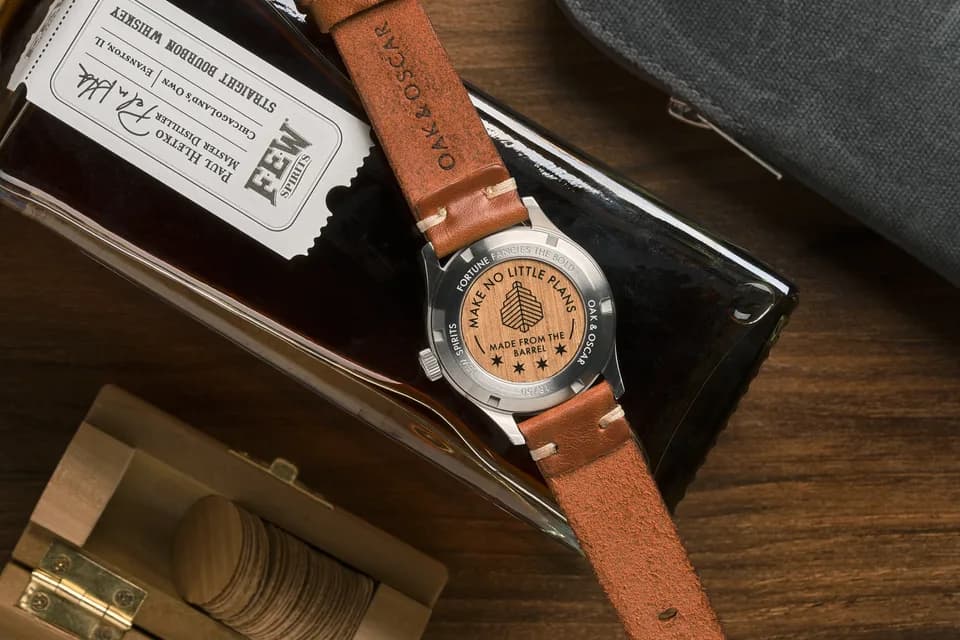
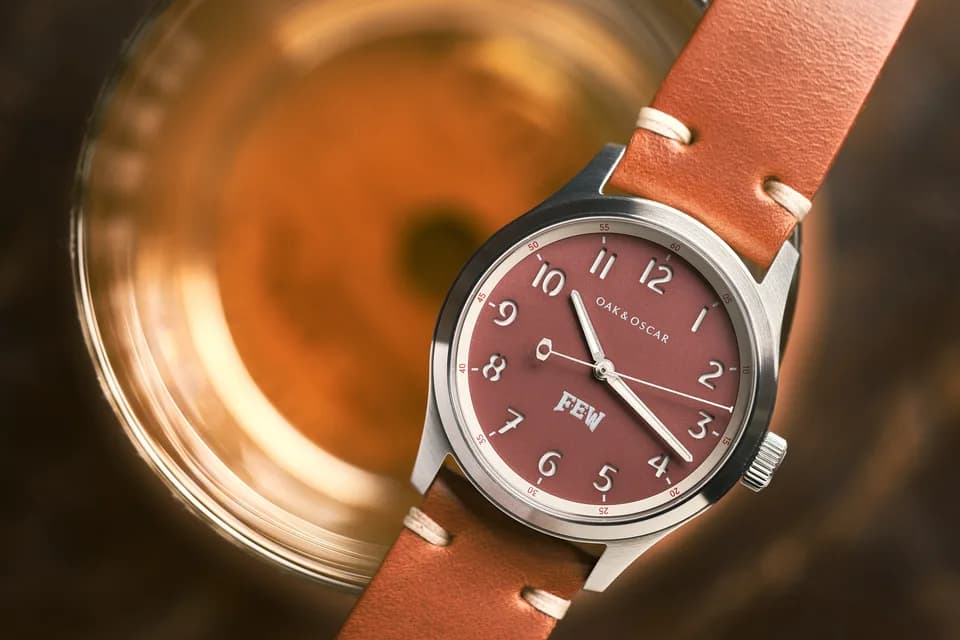
At some point the conversation turned to "we should really do something together." Our team hand-selected a single barrel at FEW for a Bottled-in-Bond release. Then we took wood from that same barrel and turned it into a disc set into the caseback of the watch, engraved with "Make No Little Plans."
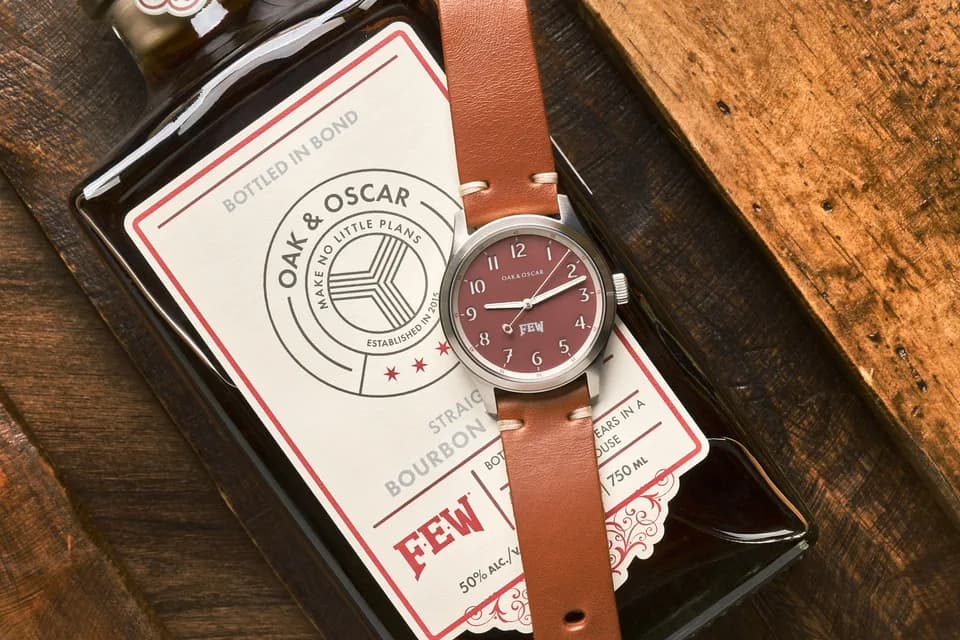
The dial is a deep salmon pulled straight from FEW's own color palette, with their logo above six o'clock. We made 50 of them, each assembled, tested and regulated here in Chicago, and every one came with a bottle from that same barrel. So you could wear the barrel and drink the barrel. It sold out, and it's still one of my favorite things we've done.
What does it take to design a watch from a blank sheet of paper to the finished piece?
Patience, mostly. Every Oak & Oscar watch is designed at HQ, and it starts with a lot of sketching and a lot of throwing things out. We obsess over proportions: case size, lug-to-lug, thickness, how it actually sits on a wrist. A watch can look perfect on paper and be totally wrong on a wrist.
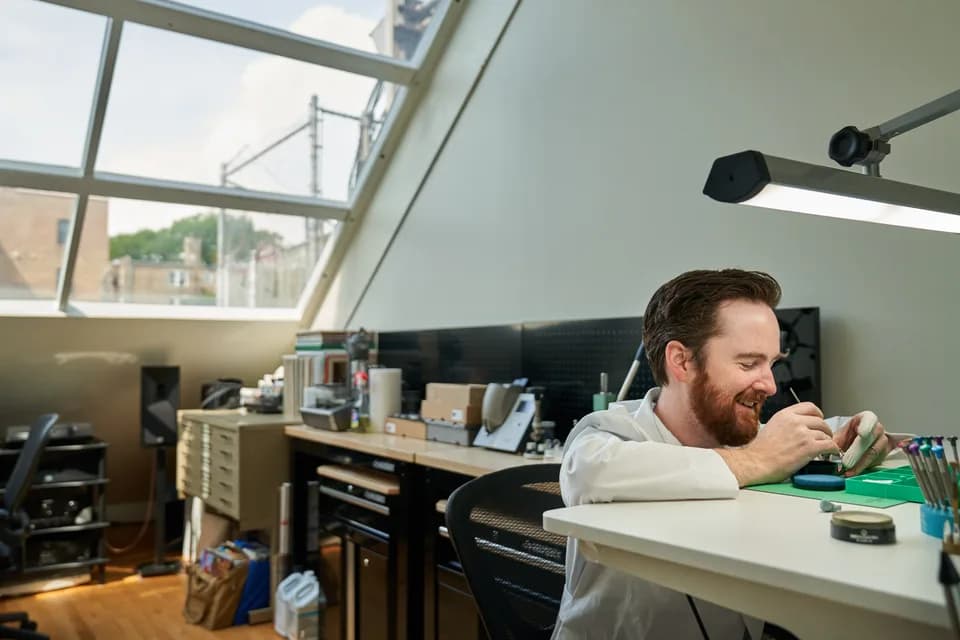
From there it's drawings, renders, then prototypes, and then more rounds than I'd like to admit. We wear the prototypes for months. Nathan, our Director of Watchmaking, puts them through their paces. Small things change along the way, like a hand length or the finish on a bezel.
Start to finish, a new model usually takes around 18 months, and sometimes as long as 24. It's a lot like whiskey. You can't rush it, and you can taste it when someone tries to.
Which Oak & Oscar watch are you proudest of, and why?
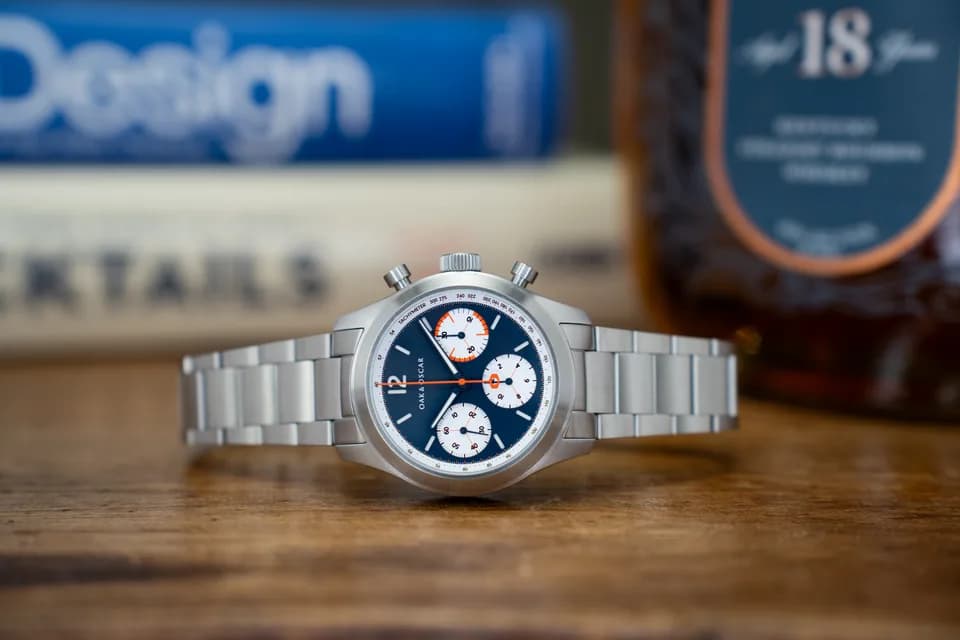
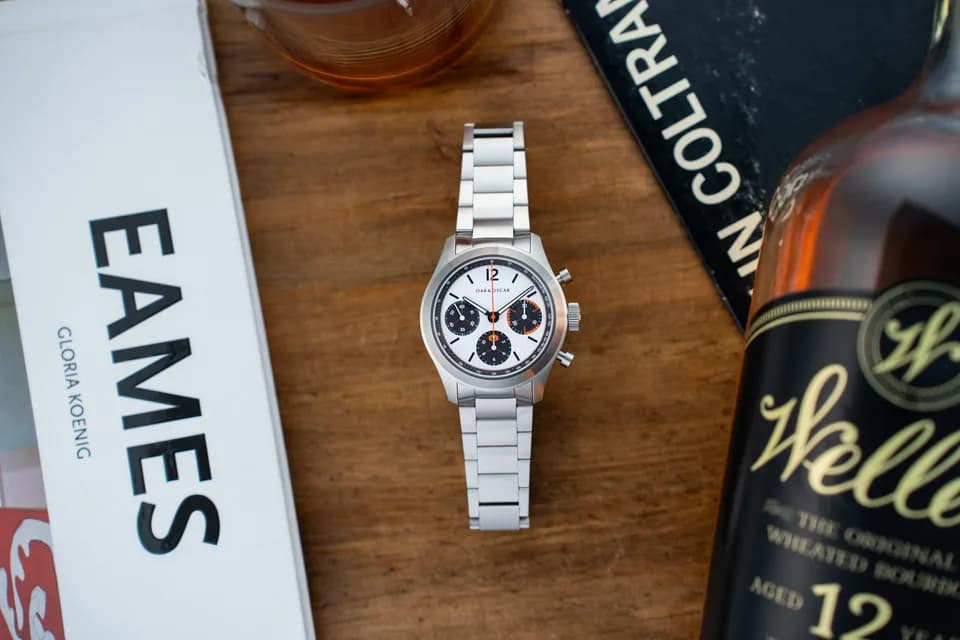
I'm proud of every watch we've made. Each one was its own triumph. But if I had to pick one, it's the Atwood. It's a manually wound flyback chronograph with a blued column wheel, which is a complication you usually see from much bigger, much older brands. And we kept it remarkably trim, our slimmest chronograph at 12.9mm.
It took a long time to get right, and when HODINKEE called it "an illustration of everything Oak & Oscar does well," that one meant a lot to the whole team.
How do you choose where to make your parts and who to work with?
It's about people first. We work with partners we trust and have relationships with, and we'd rather wait for something to be right than rush it. Our movements are Swiss, from Sellita, so our watches are Swiss-powered.
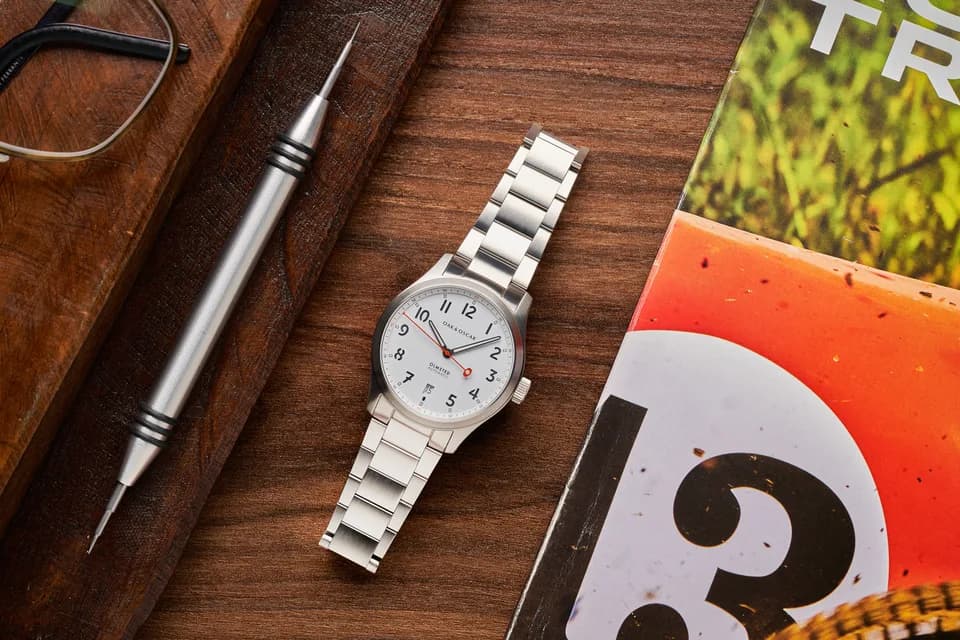
A lot happens right here in Chicago too. Every watch is designed at HQ, and every one gets its final quality control, final assembly, packing and shipping here. Our in-house watchmaker handles all servicing at HQ, and we even make parts for some of our limited editions and service parts ourselves. The Olmsted is currently assembled to order here in Chicago.
Millennials and Gen Z are discovering mechanical watches through YouTube and Instagram. How has that changed your business?
It's changed how people find us more than anything. When we started, you mostly found a brand like ours on a forum or a blog. Now someone sees a watch on a wrist in a video, and they want to know everything about it: the movement, the people, the story.
That's great for us, because we have a story to tell and we like telling it. And it makes in-person matter even more. People find us online, then come visit HQ or book a virtual appointment to see the watches up close. That's where the community really forms.
What do whisky lovers and watch lovers have in common?
A lot. Both appreciate things made with patience, by people who care. Both love the details most folks never notice, like a mash bill or a column wheel. And both are better shared. You find a good bottle of bourbon and you want to share it. It's the same with a good watch.
There's also the ritual. Winding a watch in the morning, pouring a dram at night. Little moments that make you slow down.
What's your favorite pour, and does it change depending on which watch you are wearing?
My favorite pour is the one I'm sharing with friends. But in reality, I'm a sucker for a good wheated bourbon. E.H. Taylor Seasoned Wood if I can find it, or the much more approachable, much more findable Weller Antique 107.
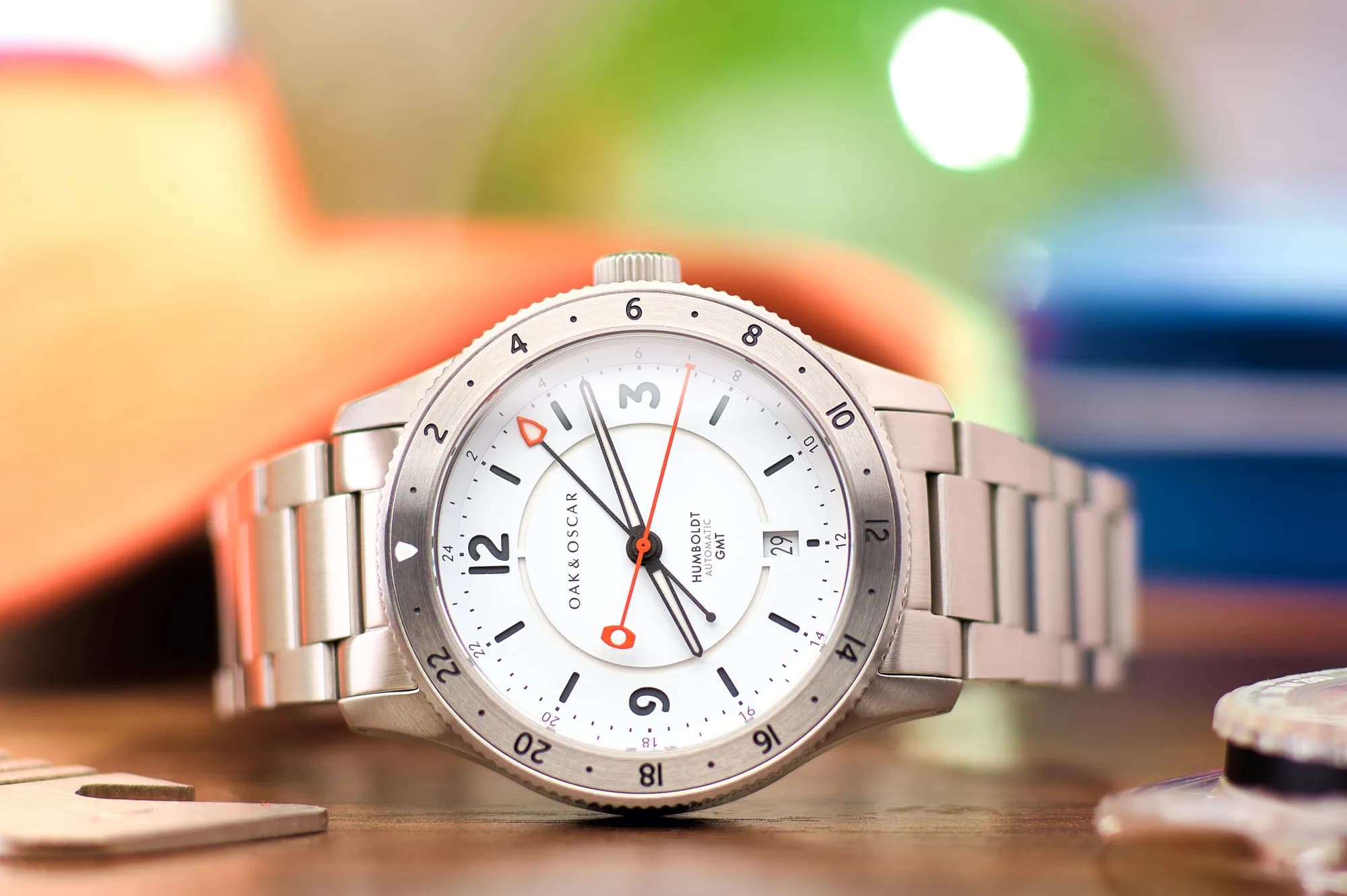
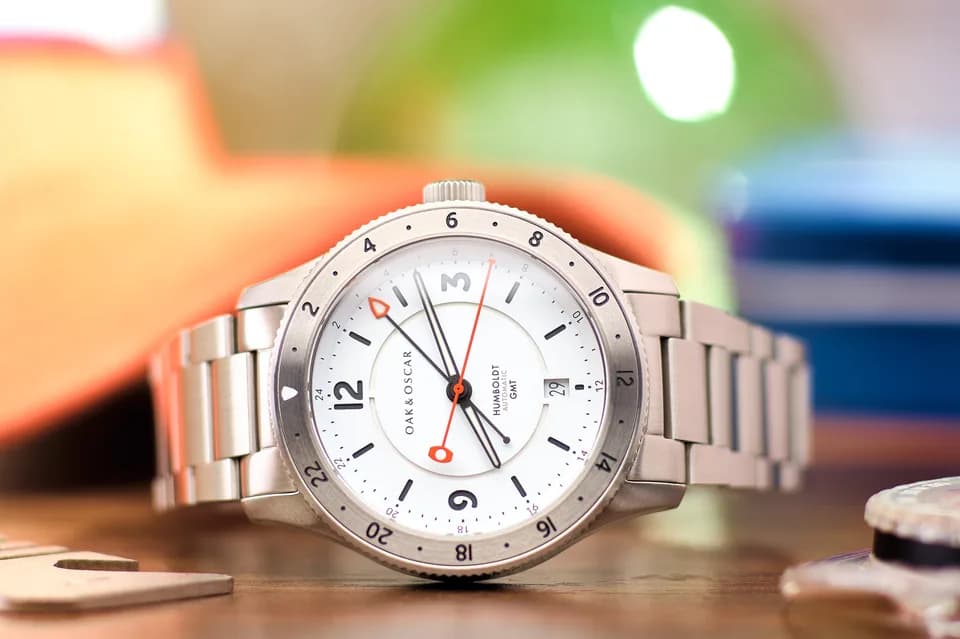
Does it change with the watch? Sometimes. A night out with the Atwood might call for something a little nicer. The Humboldt GMT is for travel, so that's whatever the locals recommend. And the Olmsted goes with everything, which is kind of the point of the Olmsted.
What's the hardest lesson you've learned running an independent watch brand?
Everything takes longer than you think. Parts get delayed, prototypes need another round, and you learn to plan for that instead of being surprised by it.
The other lesson is that you can't do it alone. Oak & Oscar wouldn't be what it is without Nathan, Tommy and Kevin. We're a team.
What advice would you give someone buying their first mechanical watch?
Buy what you love, not what someone tells you to love. And check the lug-to-lug, not just the case diameter, because size on paper and size on your wrist are two very different things.
Most of all, buy the brand. Do you trust them? Will they be around to help you out if you've got questions? A mechanical watch needs service every so often, so who services it, what's the warranty, can you call and talk to a real person? That matters more than most specs.
What's next for Oak & Oscar?
More of what we love. More hand-painted dials, more events with our Owners, and we're always working on something fun. Let's just say we're still making no little plans.