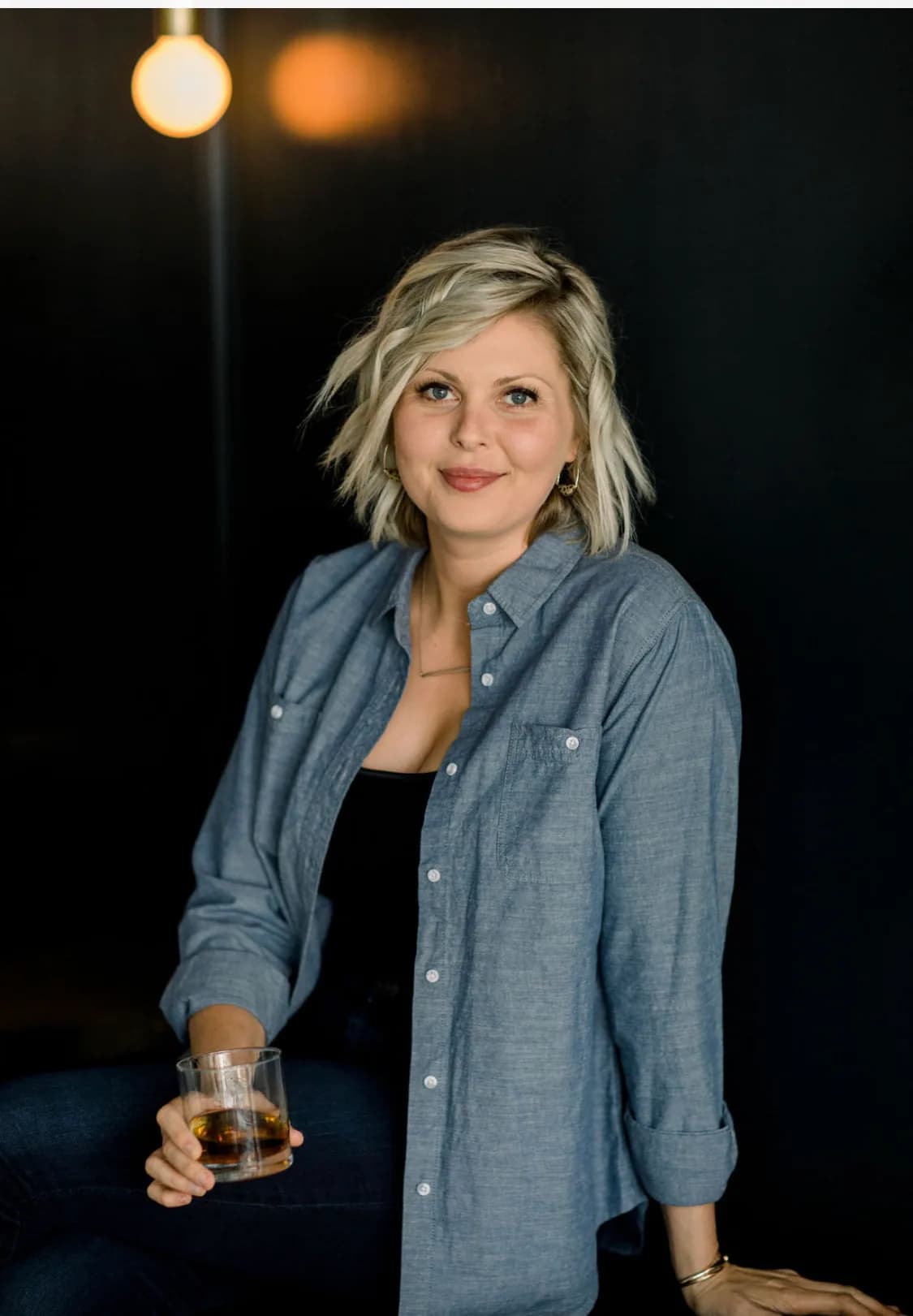
You became Kentucky's first female master distiller since Prohibition. What did that moment mean to you, and how has the industry changed since?
It’s interesting because, at the time, I don’t think I fully appreciated the historical significance of that distinction. I was 28 years old, passionate about making whiskey, and incredibly excited about the opportunity to build something meaningful. I wasn’t setting out to make history. I was setting out to make great spirits.
But over time, I’ve come to understand the responsibility that comes with being the first woman to occupy a space that has historically excluded women.
The bourbon industry has changed tremendously since then. There are more women working in production, blending, distilling, and leadership than ever before, and I’m incredibly proud to see that progress. Some of the women I admire most in this industry are people who have challenged traditional expectations and created opportunities for others along the way.
But representation and equality aren’t necessarily the same thing. There’s still work to be done to ensure women aren’t simply welcomed into the room but are genuinely respected, heard, and empowered to lead.
I think one of the most important things I’ve learned is that being the first is only meaningful if you help make sure you’re not the last.
Ultimately, I’d love to see a day when a woman becoming a Master Distiller isn’t particularly noteworthy. When that happens, I think we’ll know we’ve made real progress.
Your path into bourbon started with chemical engineering and Brown-Forman. What drew you to whiskey, and what did those early years teach you?
I’ve always been fascinated by the intersection of science and creativity, and whiskey turned out to be an extraordinary place to explore both.
My background in chemical engineering gave me an appreciation for the technical complexity of distillation, but what really captivated me was discovering how much artistry exists within that science.
At Brown-Forman, I had the opportunity to develop my sensory skills and learn from people with an extraordinary depth of knowledge and experience. I began to understand that making great whiskey isn’t simply about following a formula. It’s about understanding how countless decisions, from grain selection and fermentation to distillation, maturation, and blending, influence the character of the finished spirit.
One of the most important lessons I took from those early years was learning to trust my palate while remaining endlessly curious.
Whiskey is a fascinating combination of chemistry, agriculture, craftsmanship, and time. Even after all these years, I’m still discovering new things, and I think that’s what keeps me so passionate about what I do.
The science gives us the tools to understand what’s happening, but the artistry allows us to imagine what might be possible.
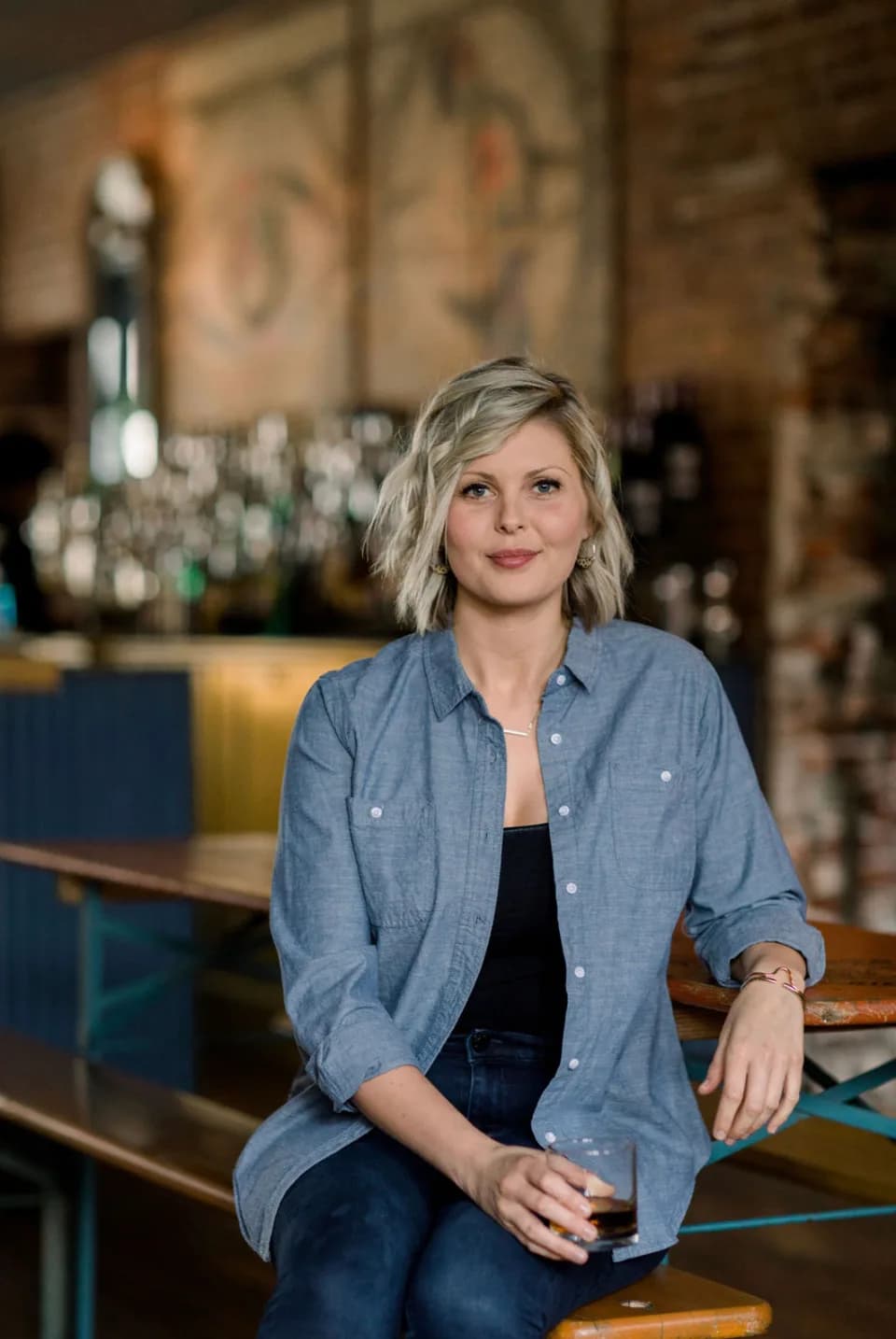
Bringing the historic Old Taylor distillery back to life as Castle & Key was a huge undertaking. What are you proudest of from that chapter?
There are so many things I’m proud of from that chapter of my life. First and foremost, I’m incredibly proud of the hard work I put into helping revive a forgotten bourbon icon. To be part of the team that brought the historic Old Taylor Distillery back to life was an extraordinary opportunity, and one I never took lightly.
But I was also doing something that felt much bigger than restoring a distillery. At 28 years old, I was bravely stepping into a role where women had historically been denied recognition. And I think that’s an important distinction. Women have always been part of bourbon’s history. They’ve worked in distilleries, contributed to the craft, and helped build this industry. What they haven’t always been afforded is the opportunity to take ownership of those contributions or receive the recognition they deserved.
I’m proud that, in my own small way, I helped challenge that history and create a little piece of my own along the way.
Those years were some of the most challenging of my life, but also some of the most rewarding and enlightening. I grew tremendously, not just as a distiller, but as a leader, a businesswoman, and a person. I learned things about resilience, conviction, and myself that I don’t think I could have learned any other way.
And while my time there ultimately ended sooner than I had imagined, I wouldn’t trade the perspective I gained from that experience. I came out the other side with a depth of understanding and personal growth that I’ll forever be grateful for.
I’m proud of the place we helped bring back to life, the spirits I created, and the small piece of history I made while I was there. But perhaps what I’m proudest of is the person I became in the process.
Tell us the story behind Forbidden Bourbon. What were you trying to do differently with it?
When I began developing Forbidden Bourbon, I wanted to challenge some of the assumptions about what bourbon is supposed to taste like.
Bourbon has a wonderful history, but sometimes I think we confuse tradition with limitation. There are so many opportunities to explore flavor within the boundaries of what legally defines bourbon.
One of the things that makes Forbidden distinctive is our use of white corn and white wheat in the mash bill. These grains contribute to a softer, more delicate flavor profile that allows some of the subtleties of fermentation, distillation, and maturation to shine through.
I wanted to create something that was approachable without sacrificing complexity. Something that could appeal to someone discovering bourbon for the first time while still offering an interesting sensory experience for someone who’s been drinking whiskey for decades.
I also wanted to challenge the notion that a Master Distiller’s job is to tell people what they should like.
My job is to create something worth exploring. What you discover in the glass belongs to you.
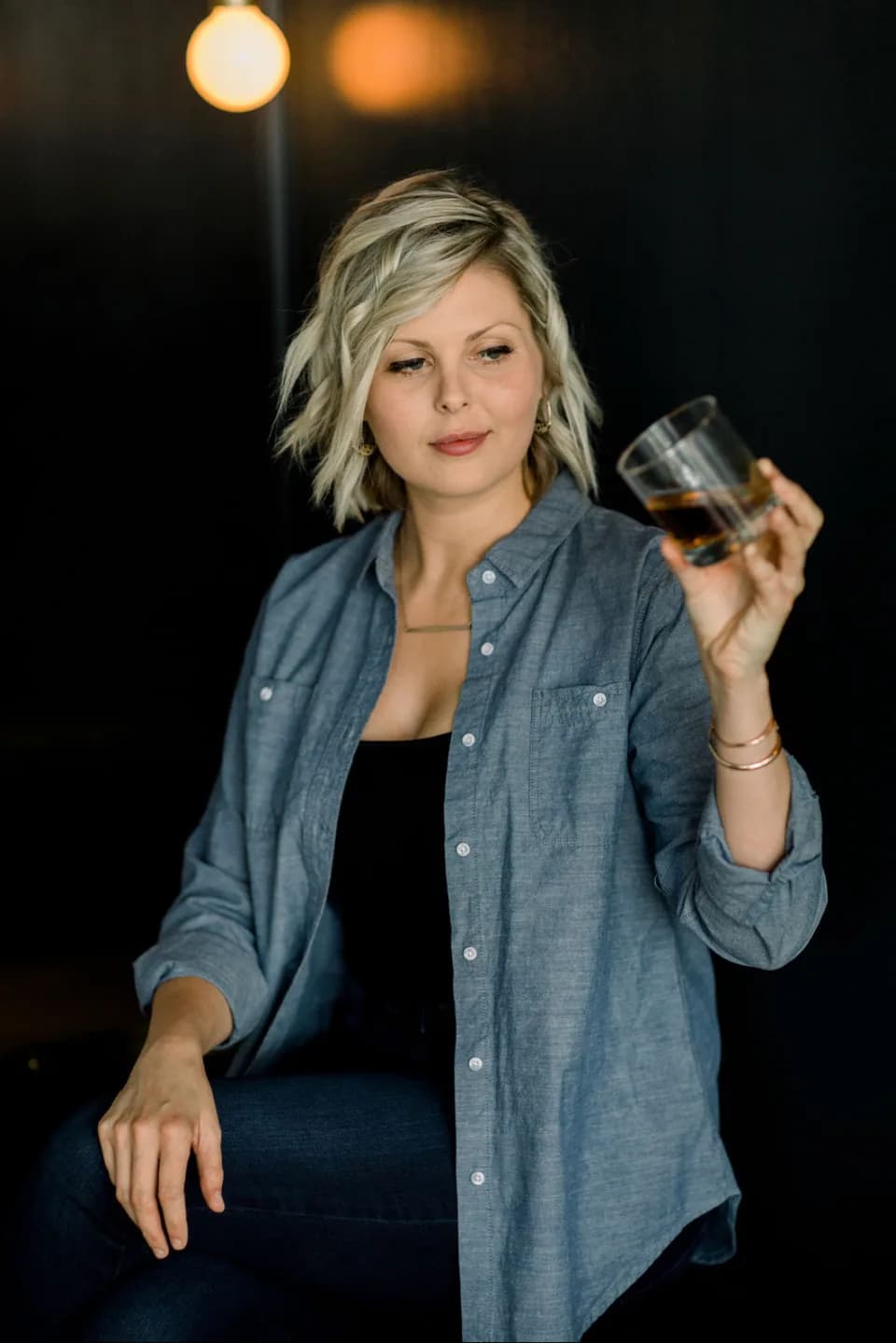
EAVES Blind turned blind tasting into something anyone can do at home. Where did that idea come from, and what have people learned about their own palates?
I started EAVES Blind because I wanted to challenge one of the most deeply ingrained narratives in American whiskey: that Kentucky makes the best bourbon, and the rest of the country is somehow playing catch-up.
Don’t get me wrong, I’m incredibly proud of Kentucky’s bourbon heritage. It’s where I built my career! But the idea that geography alone determines quality has always bothered me. There are extraordinary craft distillers producing whiskey all across the United States, and I wanted to create a platform that would give their work the recognition it deserves.
Blind tasting seemed like the perfect way to challenge those assumptions. Remove the label, the price, the reputation, and the state of origin, and suddenly people have to confront their own preferences without the influence of preconceived notions. It’s remarkable how often the results surprise them!
But EAVES Blind was always about something bigger than tasting whiskey. I wanted to encourage people to think about American whiskey through the lens of production regions rather than individual states. Our climate, agriculture, geography, and local traditions all influence the spirits we produce, and those differences deserve to be explored and celebrated.
As I look toward the future, I genuinely believe this could become my most important contribution to the industry.
I’m incredibly proud of what I’ve accomplished for women in whiskey, but I believe our greatest opportunity to expand diversity begins with opening our minds to diversity of geography. When we recognize that great whiskey can come from anywhere, we begin to recognize the extraordinary diversity of people who can make it. And when we embrace a broader range of makers and perspectives, we create opportunities to welcome a more diverse community of consumers.
Diversity of geography leads to diversity of makers, which ultimately leads to diversity of consumers.
That’s the legacy I’m working toward.
Anyone interested in learning more about EAVES Blind and my vision for American whiskey can visit my website or join the conversation at Patreon.com/mariannebmd, where I’m continuing to build this community and explore what American whiskey can become.
What does your process look like when you're developing a new whiskey, from the first idea to the final blend?
It usually starts with a question.
What would happen if we approached this differently? What flavor experience am I trying to create? Is there something I haven’t tasted before that I think should exist?
Sometimes the inspiration comes from a particular grain, a barrel, a botanical, or even an experience completely unrelated to whiskey.
Once I have an idea, the scientist in me takes over. I start thinking about the chemistry of the ingredients, fermentation characteristics, distillation parameters, and how those decisions might influence maturation.
But there’s also an enormous amount of intuition involved.
One of the things I love most about blending is that individual components don’t always behave the way you expect them to when they’re combined. Sometimes two whiskeys that are perfectly lovely on their own create something extraordinary together. Other times, the combination is less interesting than either component individually.
That’s where experience, experimentation, and a willingness to be wrong become incredibly valuable.
I approach blending almost like composing music. Every component has a role to play, and the goal isn’t necessarily to make every individual note stand out. It’s to create something harmonious, complex, and memorable.
And occasionally, the most interesting thing you can do is introduce a little dissonance.
You also consult for distilleries around the country. What's the most common mistake you see new distillers make?
I think one of the biggest mistakes people make is underestimating how complicated this business really is.
Loving whiskey and knowing how to make whiskey are two very different things. And knowing how to make great whiskey doesn’t necessarily mean you know how to build a successful whiskey business.
I’ve encountered incredibly talented people who understand production but underestimate the importance of branding, distribution, and financial planning. I’ve also encountered people with fantastic marketing concepts who haven’t invested enough time understanding the product they’re trying to sell.
You really need both.
But perhaps the most important advice I can offer is to remain curious and humble.
Distilling is an extraordinary combination of science, agriculture, engineering, and artistry. Nobody knows everything, and the moment you become convinced you’ve figured it all out is probably the moment you stop getting better.
And please, don’t build a distillery simply because you think owning one sounds romantic. There’s a lot more plumbing involved than people imagine!
How do you think about flavor today compared with when you started? Has your own palate changed?
Absolutely! Although I think the biggest change isn’t necessarily what I taste, but how I think about what I’m tasting.
Early in my career, I was very focused on identifying individual flavor compounds and understanding why certain characteristics were present. That analytical foundation was incredibly important, and I still rely on it every day.
But experience has taught me to appreciate the bigger picture.
I’m less interested in whether a whiskey checks all the boxes of what it’s traditionally supposed to be and more interested in whether it creates a compelling sensory experience.
I’ve also become much more comfortable appreciating things that aren’t necessarily aligned with my personal preferences.
There’s a difference between recognizing that something is beautifully made and deciding it’s something you personally want to drink.
And I think that’s an important distinction for consumers, too.
Taste is incredibly personal, and our preferences evolve as we accumulate experiences. The more things you taste, the more reference points you develop.
I hope my palate continues to change for the rest of my life. How boring would it be to spend decades exploring flavor and never discover something that surprises you?
Gen Z and millennial drinkers are changing how people discover bourbon. How do you reach younger drinkers, and what do you think they're looking for?
I think younger consumers are challenging some of the assumptions the spirits industry has relied on for generations, and frankly, I think that’s a good thing!
They’re asking different questions. Who made this? Where did it come from? What does this brand stand for? And perhaps most importantly, does this experience actually resonate with me?
For a long time, the bourbon industry has relied heavily on heritage, tradition, and geography to establish credibility. And while those things are important, I don’t think they should be the only measures of quality or authenticity.
One of the things I’m most passionate about is expanding the conversation around American whiskey beyond Kentucky. There are extraordinary craft producers working across the country, influenced by different climates, agricultural traditions, and regional cultures. When we begin celebrating that diversity of geography, we naturally create opportunities to celebrate a greater diversity of makers and, ultimately, consumers.
I think younger generations are particularly receptive to that broader perspective. They’re interested in discovering something new, supporting people and businesses they connect with, and participating in experiences that feel authentic rather than prescribed.
We also need to stop making whiskey unnecessarily intimidating. You shouldn’t have to know the difference between every mash bill or memorize a list of tasting notes to enjoy a glass of bourbon. And you certainly shouldn’t feel obligated to drink it neat to be taken seriously.
I don’t think the future of bourbon depends on convincing younger consumers to embrace all of our traditions. I think it depends on being willing to reconsider which traditions are worth preserving and which ones might be holding us back.
Our readers love pairing whiskey with cigars. What bourbon would you pour with a cigar, and which cigar would you choose?
Well, I have to confess that I’m not a cigar smoker, so I’m probably not the best person to recommend a specific cigar!
But I do find the sensory relationship between whiskey and cigars fascinating.
When I think about pairing flavors, I’m generally looking for either complementary characteristics or interesting contrasts.
For a richer, fuller-bodied cigar, I’d probably reach for a bourbon with enough structure and intensity to hold its own. Something with pronounced oak, baking spice, dark chocolate, or toasted nut characteristics could create an interesting pairing.
A higher-proof bourbon might also be worth exploring, although I’d encourage people to experiment with a little water to see how the experience changes.
Ultimately, I think the best pairings are the ones that allow you to discover something new about both components.
And since I’m not a cigar smoker myself, I’d happily leave the cigar selection to someone who knows that world better than I do!
What advice would you give women, or anyone who doesn't see themselves in bourbon yet, who want to build a career in whiskey?
First, I would tell them that they absolutely belong here.
You don’t need to look like the people who came before you to be qualified to do the work, and you certainly don’t need their permission to pursue something you’re passionate about.
When I became Kentucky’s first female Master Distiller since Prohibition, I understood that I was stepping into a space where women had historically been excluded. But I wasn’t fighting to be treated as an exception. I wanted to change the conditions that made me an exception in the first place.
That’s a distinction that has become increasingly important to me throughout my career.
Representation matters, but representation alone isn’t enough. Being invited into the room doesn’t necessarily mean you’re being heard, respected, or given the opportunity to lead.
I’ve spent much of my career challenging expectations about who belongs in this industry, and one of the most important things I’ve learned is that you cannot allow someone else’s inability to recognize your value to determine how you see yourself.
Develop your expertise. Stay curious. Ask questions. Challenge assumptions. Find people who genuinely celebrate your success rather than simply tolerate your presence.
And when you find yourself in a position to create opportunities for others, do it.
I’ve never wanted to be the only woman at the table. I’ve wanted to build a bigger table, with room for people who haven’t traditionally been invited to sit down.
Because the goal isn’t simply to make space for a few exceptions. It’s to create an industry where those exceptions no longer exist.
What's next for you, and what are you most excited about right now?
I’m approaching a pretty exciting chapter of my life and career, and I find myself increasingly interested in creating things that have an impact beyond the products themselves.
I’m continuing my work as Master Distiller of Forbidden Bourbon, while also developing projects that allow me to explore the creative, educational, and collaborative sides of the spirits industry in new ways.
One of the things I’m particularly excited about is creating opportunities for people to experience the art of blending firsthand. I’ve spent much of my career helping people understand how whiskey is made, but I’m increasingly interested in inviting them into the creative process itself.
I’m also continuing to build on the vision behind EAVES Blind, which I genuinely believe has the potential to become one of my most meaningful contributions to American whiskey.
I’ve spent nearly two decades working in an industry that has traditionally defined excellence through a fairly narrow lens. And while I’m incredibly proud of the progress we’ve made, I think there’s an enormous opportunity to expand our understanding of what American whiskey can be, where it can come from, and who gets to participate in creating it.
I want to help build an industry that celebrates diversity of geography, diversity of makers, and diversity of consumers. Not simply because inclusion is important, but because I believe that embracing different perspectives makes the entire industry more interesting, innovative, and ultimately more successful.
And on a personal note, I’m turning 40 in December, which has prompted quite a bit of reflection about what I want the next decade to look like.
I’ve spent a significant portion of my career proving that I could succeed in an industry that wasn’t necessarily built with someone like me in mind.
Now I’m much more interested in spending my energy creating things that inspire me, collaborating with people who share my curiosity, and building the kinds of opportunities I wish had existed when I started.
I think the next chapter is going to be a lot of fun. And perhaps a little disruptive!