Carolyn, you were a nonprofit lawyer and a mother of twins when you launched Yobo in 2015. What gave you the nerve to start a spirits brand with no industry background?
I’m not sure it was nerve as much as needing a creative outlet. I was working full time as a public-interest lawyer, my twins were toddlers, and life was pretty intense. I loved my legal work and never intended to leave it, but I wanted to build something that felt completely different and creative.
At the same time, I was watching Korean and Korean-inspired chefs in New York do really interesting things with food. They respected where the food came from, but they didn’t feel constrained by tradition. I kept thinking, why wasn’t that same creativity happening with Korean drinks?
My husband James and I started talking about what a modern, high-quality American soju could look like, and at some point all that talking turned into actually making it.
I also probably benefited from not knowing enough to understand all the reasons I shouldn’t do it. Sometimes being an outsider lets you ask questions that people inside an industry have stopped asking.
Why did you make the first American craft soju from grapes in the Finger Lakes instead of rice?
I really wanted to make something that hadn’t already been done. There were already people making beautiful traditional rice soju, and I didn’t want to just imitate that. Grapes felt elegant and completely unexpected.
The Finger Lakes also had personal meaning for us. James and my brother both went to school in that part of New York, so we already had a connection to the region. We partnered with a distillery there and used locally grown Catawba grapes. They gave us these beautiful natural aromatics and let us make something light and floral without adding flavoring or sugar.
It was Korean in inspiration but very much rooted in New York, which felt like a pretty accurate expression of being Korean American.
That was the beginning of Yobo. The brand has evolved since then, and today the line is made in New Jersey.
What does "yobo" mean, and why did it feel like the right name?
“Yobo” is a Korean term of endearment most commonly used between spouses — basically “honey” or “darling.”
The company really started through these late-night conversations between James and me, so there was an obvious personal connection to the word. But I also liked what it represented beyond marriage.
Soju is such a social drink. You share it around a table with people you care about. Over time, Yobo came to represent that bigger idea of connection — the people you build a life with, eat with, drink with and trust.
Most Americans picture the green bottle. What's the biggest misconception about soju you're still fighting?
Probably the idea that soju is one very specific thing: inexpensive, sweet, low-proof alcohol that comes in a green bottle and gets taken as shots at Korean barbecue.
And I have a lot of affection for green-bottle soju. I grew up drinking it. I’m not interested in knocking it at all. It’s just one expression of a much bigger category.
Soju has been made from different ingredients and at different proofs throughout its history. Today you have people making beautiful traditional rice sojus, modern craft sojus, fruit-based expressions and everything in between.
The misconception I’d like to get past is that soju has to be cheap, has to taste a certain way, or even has to be consumed a certain way.
K-dramas, K-pop and K-food have exploded with Gen Z and millennials. How has the Korean culture wave changed who's buying Yobo?
When we started Yobo, Parasite, Squid Game and the explosion of BTS hadn’t happened yet. Korean food was already becoming really exciting in places like New York, and we thought Korean drinks might eventually follow, but I don’t think we could have imagined how central Korean culture would become to global pop culture.
Ten years ago, we often had to begin by explaining what soju even was. Now people have seen it in a K-drama, experienced it through Korean food, heard about it through music, or discovered it while traveling.
What I find especially interesting is that the curiosity goes way beyond Korean consumers. Younger drinkers increasingly approach soju as another spirits category they want to explore. And that creates a lot more room for something like Yobo because they’re less attached to the idea that there’s only one “correct” version of soju.
Soju is lower-ABV than most spirits. How does Yobo fit the "drink less, drink better" mood of younger drinkers?
That idea was actually part of Yobo long before “low-ABV” became an industry trend.
When I started the company, I was a working mother with two very young children. I wanted something elegant that I could have with dinner and still function the next morning.
Luxe is 23% ABV, so you get the experience and complexity of a spirit without necessarily starting at 40% alcohol. It also gives you a lot of flexibility. You can sip it, drink it over ice, lengthen it with sparkling water or put it into a cocktail without every drink becoming incredibly boozy.
For me, “drink less, drink better” shouldn’t feel like deprivation. It’s really about being more intentional about what’s in the glass and actually enjoying it.
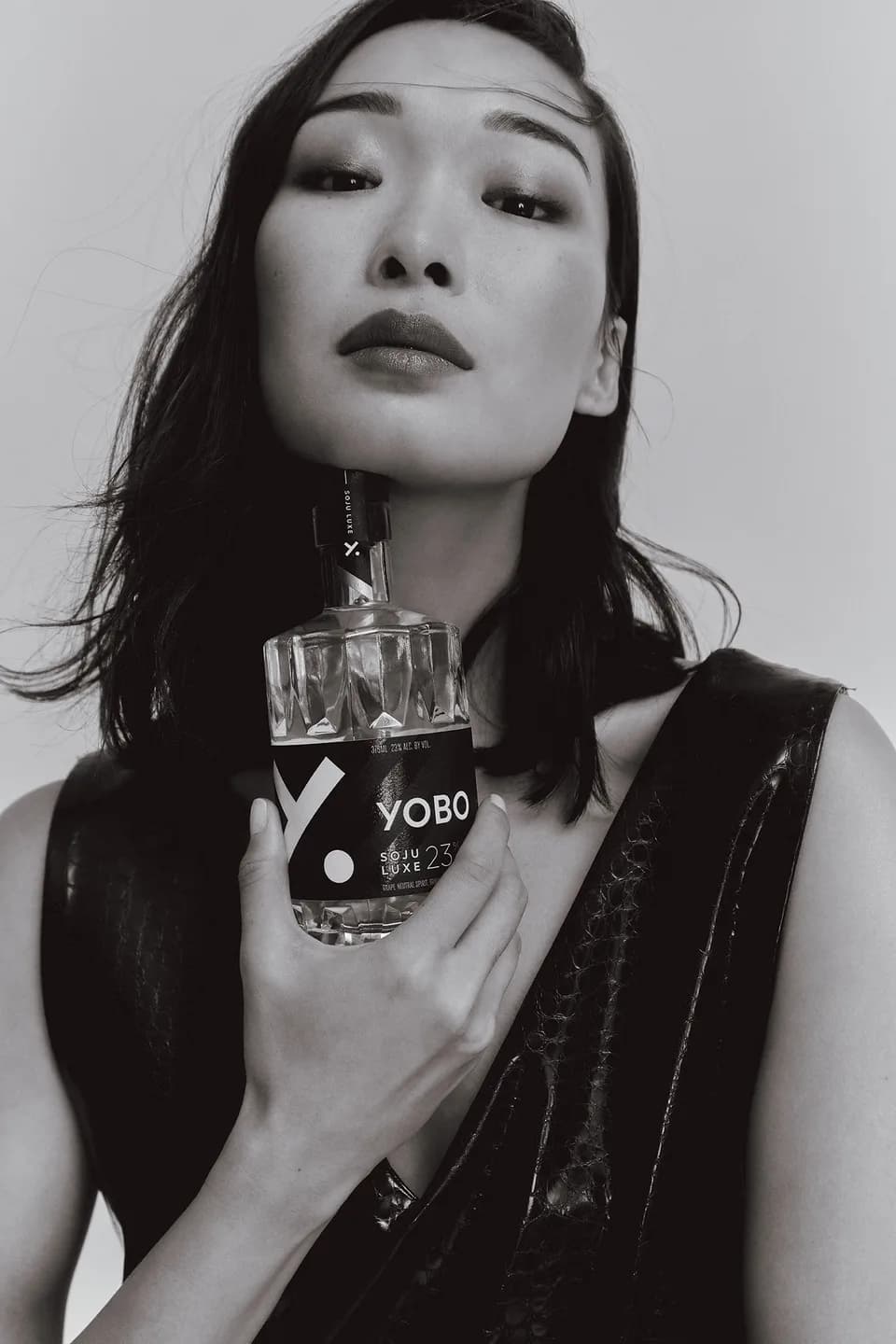
What's the right way to drink Yobo Luxe: neat, chilled, in a highball, or with food?
Honestly, all of those.
If someone is trying Luxe for the first time, I’d probably tell them to drink it chilled or over ice first so they can actually taste it. It has a floral quality from the grapes, softness from the wheat and a little character from the rice.
But I’m really not precious about drinking rules. Soju is fundamentally a social drink.
I personally love it with seltzer and fresh citrus. It’s also great with food because 23% ABV gives it enough structure without overpowering what you’re eating.
The right way to drink it is basically whatever way you enjoy it.
As a woman and an Asian American founder in a male-dominated industry, what pushback did you face early on, and what changed?
There was skepticism on a few different levels.
I heard that soju had to come from Korea. That it couldn’t be made from grapes. That soju was supposed to be cheap.
And then there was the broader challenge of being an Asian American woman with a small spirits brand, walking into rooms and trying to convince buyers who often didn’t understand the category at all.
I remember approaching non-Asian restaurants and being told, essentially, “Maybe you should sell this to the sushi restaurant.” Korean soju, Japanese sake — it all got lumped together as “Asian alcohol.”
That was frustrating, but it also showed us how narrowly people were thinking about the category at the time.
What’s changed is both the consumer and the industry. Korean culture is much more familiar now, the premium-soju category has expanded, and there are many more Korean American and Asian American founders creating interesting products.
We don’t have to spend quite as much time proving that the category deserves to exist. More and more, the conversation can actually be about what’s in the bottle.
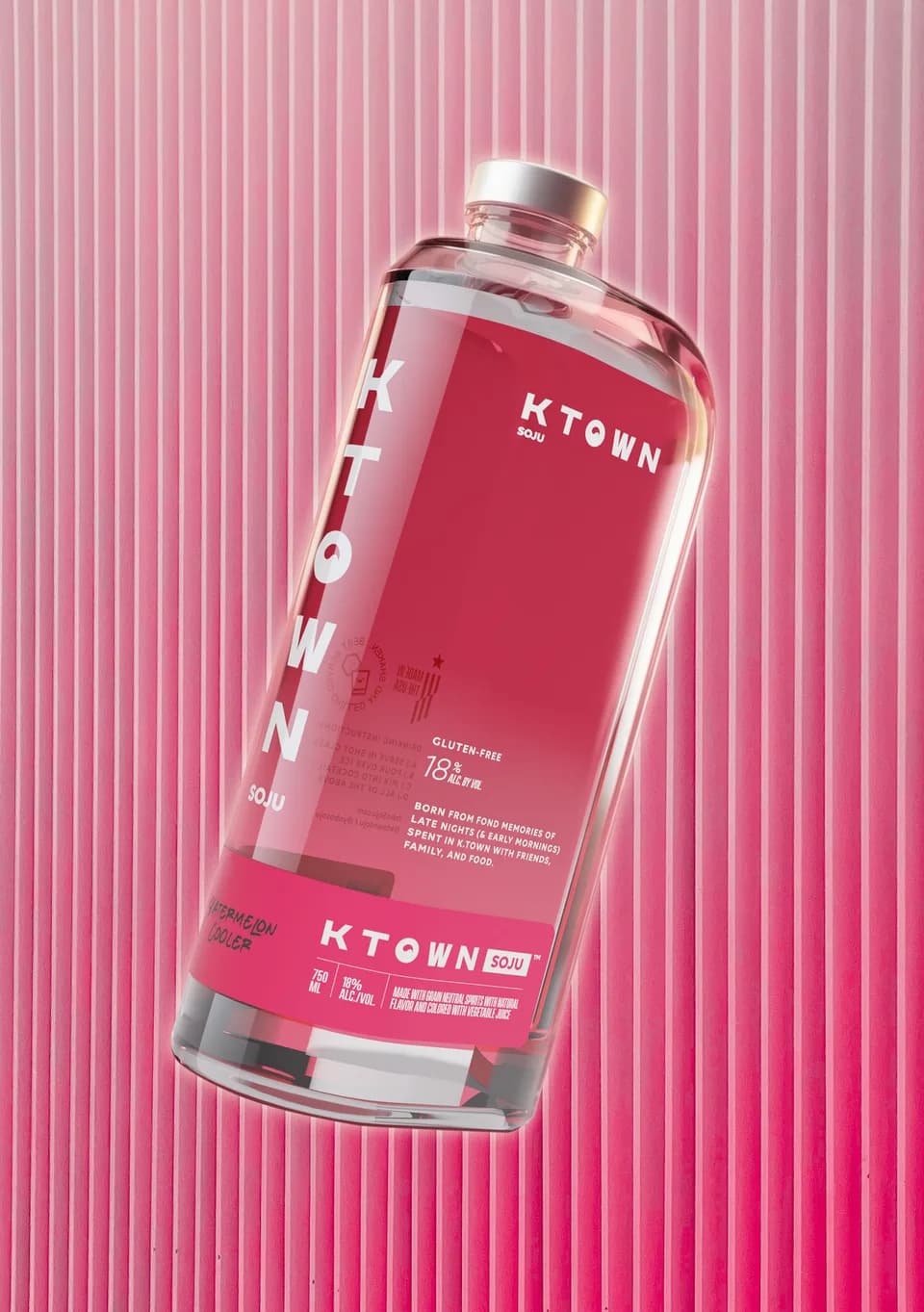
Give our readers a simple, impressive Yobo cocktail they can make at a pregame or dinner party.
I almost always tell people to keep it simpler than they think.
YOBO HIGHBALL
2 ounces Yobo Luxe
3–4 ounces very cold sparkling water
Fresh lemon, lime or grapefruit
Lots of ice
Fill a highball glass with ice, add Yobo Luxe, top it with sparkling water and squeeze in some fresh citrus.
The bubbles and citrus open up the aromatics in the spirit, it isn’t overly sweet, and you can make one in about thirty seconds. It works just as well before dinner as it does alongside food.
That’s basically how I like to drink soju myself: seltzer and whatever fresh citrus happens to be around.
Where do you want Asian American spirits to be in five years, and who else in the space should people be watching?
I’d like us to get to a point where “Asian American spirits” doesn’t automatically mean niche.
When Yobo started, there was still this tendency to think that a Korean spirit belonged in a Korean restaurant, a Japanese spirit belonged in a Japanese restaurant, and everything else got put into an “Asian” section.
I’d like the next generation of brands to have the freedom to move beyond that.
Asian American identity isn’t monolithic, so the drinks shouldn’t be either. Some producers are going very deeply into traditional techniques. Other people are making something completely new. I think both are valuable. Newer producers entering the category are all approaching Korean spirits differently. That’s good for everyone.
Ten years ago, one of Yobo’s biggest challenges was that American consumers barely understood the category. I’d much rather be part of a crowded, creative category than be the only bottle trying to explain what soju can be.
In five years, I’d love to see Korean and Asian American spirits on serious cocktail lists and back bars alongside tequila, whiskey, gin and mezcal. They should just be part of the American drinking landscape.