







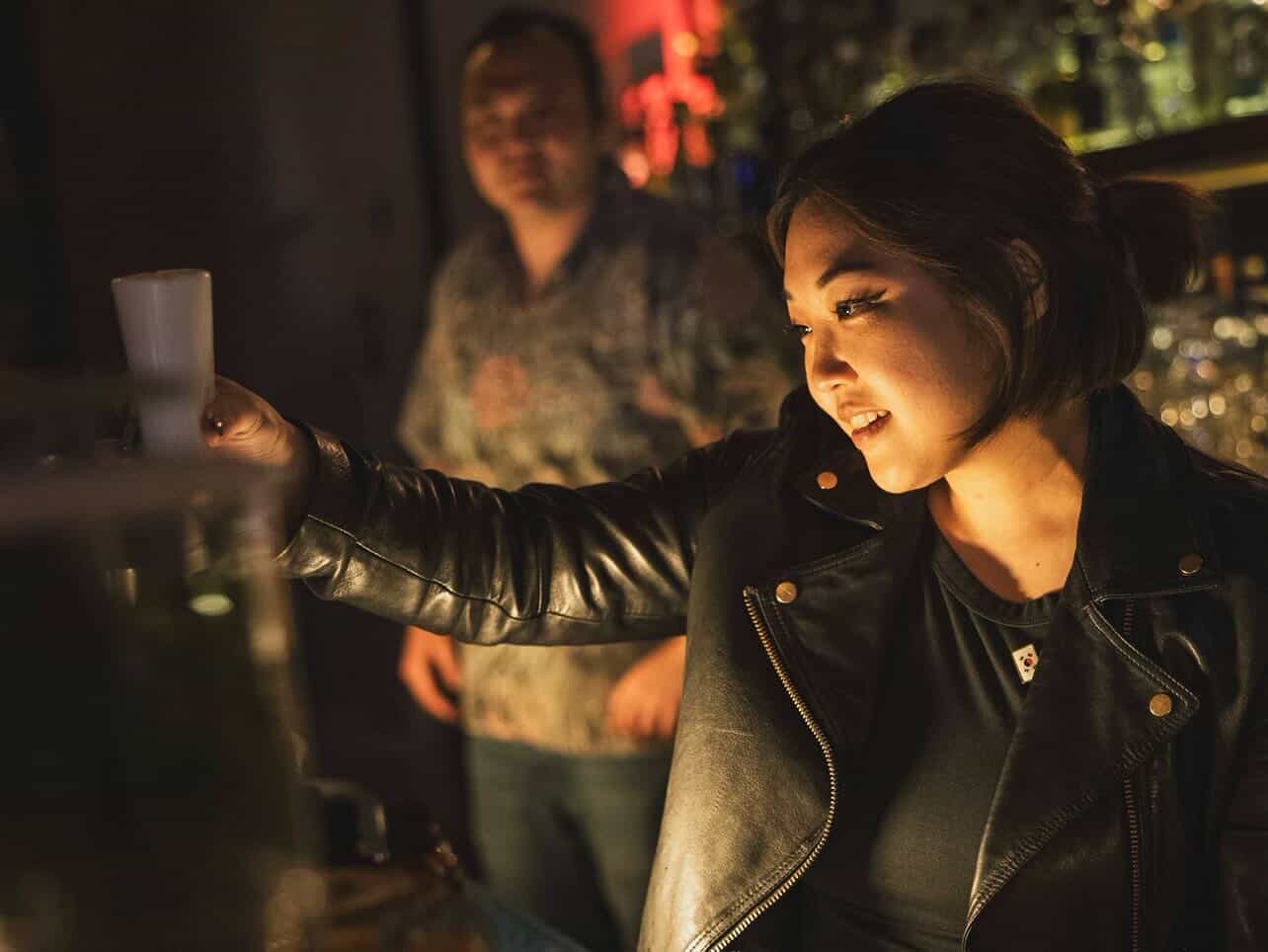
The modern cocktail has become something of a paradox. At one end of the spectrum, bars are charging the price of a steak dinner for a single drink. At the other, younger consumers are drinking less than previous generations, gravitating toward authenticity, transparency, and experiences that feel genuinely worth their time and money. Somewhere in between sits a new breed of bartender—part scientist, part storyteller, part cultural translator.
Jennifer belongs firmly in that category.
With roots in molecular mixology, psychology, pharmacy, and nearly two decades of hospitality experience, she approaches cocktails from an angle that feels increasingly relevant in today’s drinks landscape. For her, the glass is rarely the point. What matters is the experience surrounding it: the memory a flavor unlocks, the emotion a drink evokes, or the story hidden beneath a carefully chosen ingredient.
That perspective has led her to explore everything from Korean culinary traditions and sensory science to the economics of luxury cocktail bars and the evolving expectations of modern guests. The result is a philosophy that views cocktails not merely as products to consume, but as vehicles for connection.
In a moment when the hospitality industry is asking bigger questions about value, experience, and the future of drinking culture itself, Jennifer offers a thoughtful perspective on where cocktails have been—and where they’re headed next.
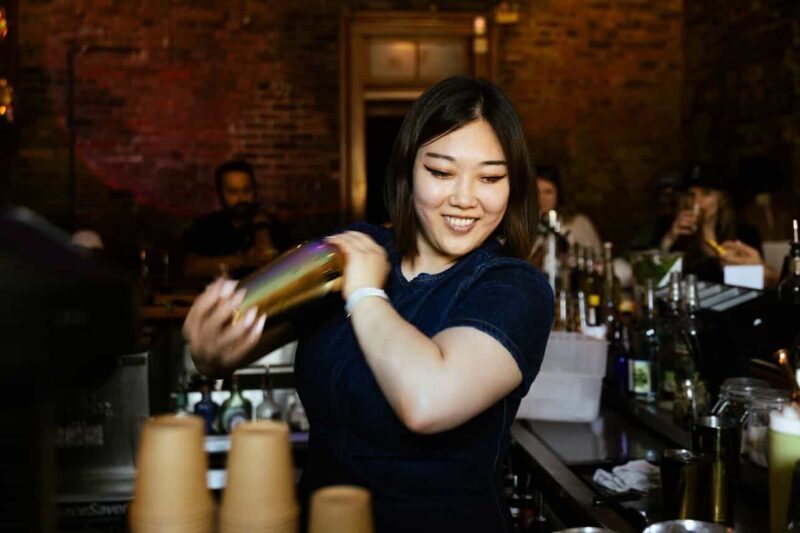 Q: Jennifer, you were drawn to molecular mixology early on—how do you think understanding science changes the way someone experiences a cocktail, not just how it’s made?
A: For me, once you understand the science behind cocktails, you stop just seeing what’s in the glass and start paying attention to how everything actually works together.
Those scientific molecular techniques whether it’s clarification, carbonation, infusions, or foams, they’re just different ways of shaping how someone experiences a drink. How it smells when it hits the nose, how the texture feels, how the flavors show up and evolve.
It completely shifts the focus from just what’s in the glass to how and why it behaves the way it does. And that’s what I love about it.
So instead of someone just tasting a drink, you’re actually guiding the experience like how it opens, how it lifts, how it finishes. It becomes less about building cocktails for flavor alone, and more about being intentional with the full experience from first sip to last.
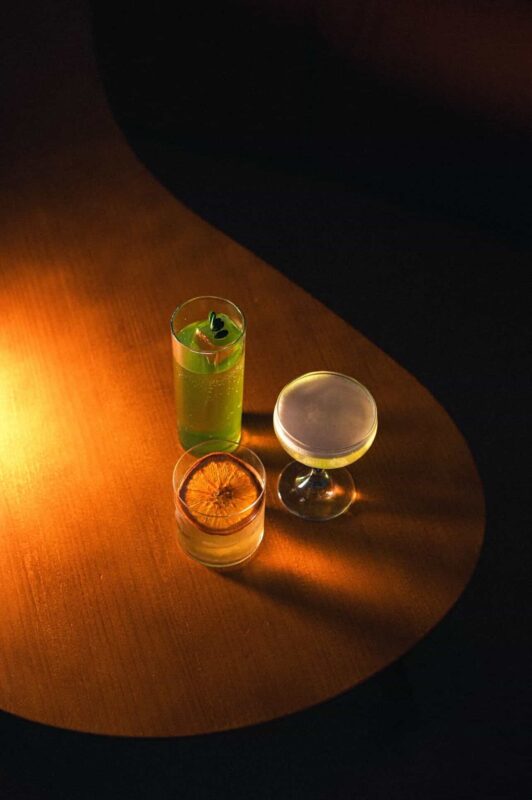 Q: A lot of people focus on ingredients, but you talk about storytelling—what transforms a drink from “technically good” into something emotionally memorable?
A: I believe a drink becomes memorable when it stops being about ingredients and starts being about a feeling.
I usually get inspired by an emotion, something I’ve lived through or a memory that stayed with me, and use ingredients as a way to translate that into something you can taste. Technique matters, but intention is what gives it meaning.
It’s similar to how we remember things. For example, you might not recall every detail, but you remember how it felt, and that’s what I try to capture in a glass.
One drink that really shaped my approach came from a simple moment: after my first heartbreak, my mom made me soybean noodle soup that brought me a sense of comfort and grounding. Years later, I tried to express that feeling in a cocktail. It wasn’t about recreating the dish, just holding onto that emotion and sharing it in a different way.
A technically good drink can impress you, but the ones tied to something real tend to stay with you a little longer.
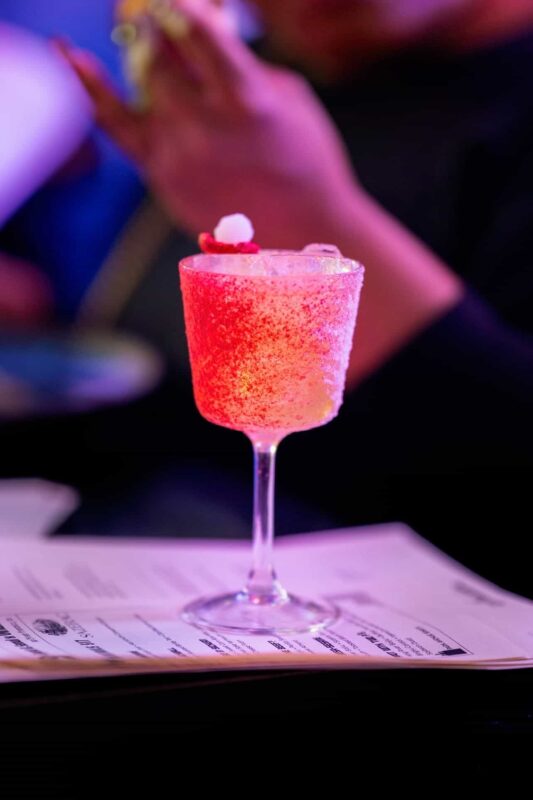 Q: You incorporate your Korean heritage into your work—how do you approach translating something as complex as culture into a single drink?
A: I approach it by narrowing culture down to something specific and tangible rather than trying to represent it as a whole.
That usually starts with a dish or flavor profile, often ones that challenged me or taught me something, then looking at the ingredients behind it, their seasonality, and how they’re traditionally used. I think about how those ingredients are grown, preserved, or prepared, and the context around them: the people, the environment, and the history that shaped those flavors.
From there, it becomes a translation process, adapting those elements into a cocktail through technique, structure, and balance. It’s less about replicating a dish and more about understanding its foundation, then expressing that in a way that still feels respectful and intentional in a glass.
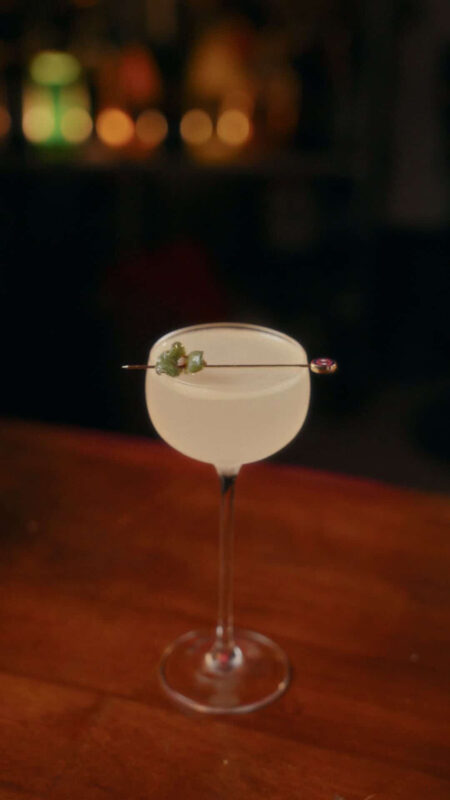 Q: Coming from pharmacy and psychology, do you think people outside hospitality actually have an advantage when entering the cocktail world?
A: I don’t think it’s an advantage so much as a different perspective.
Coming from pharmacy and psychology can give you another way of looking at things, whether that’s thinking more structurally about balance, or being more aware of behavior and how people experience a drink. I was able to weave some of that into how I work, and it definitely shaped how I observe and build.
But hospitality itself isn’t something you learn from books. It’s learned behind the bar, through repetition, people, and time. I started as a barback and worked my way up over the last 18 years, and that foundation mattered more than anything.
Every day in this industry is different, and it rarely goes according to plan. Over time, you learn to adapt, stay resilient, and keep moving forward no matter what the shift throws at you. That’s really what shaped me the most.
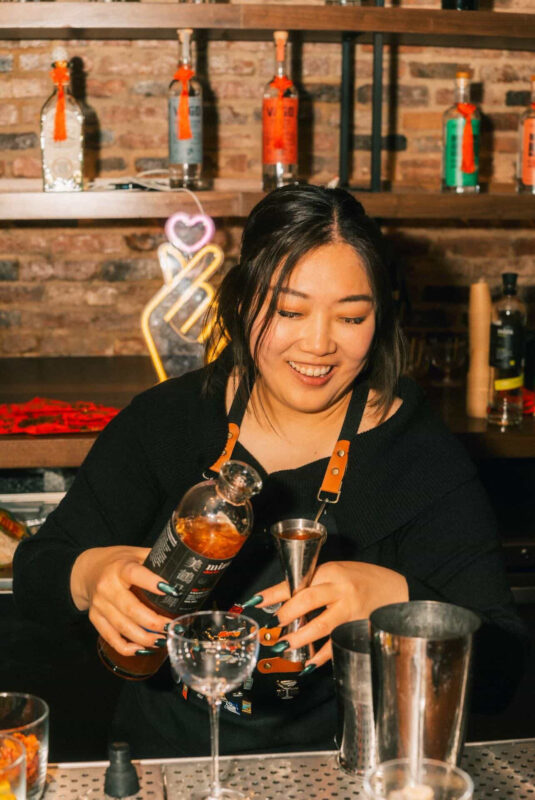 Q: In NYC, we’re seeing cocktail bars like Sunken Harbor Club and Sip & Guzzle pushing $30+ drinks at a time when Gen Z is drinking less and prioritizing transparency—do you think this model is sustainable long-term, or is the industry heading toward a correction?
A: I think what we’re seeing right now is a real shift in drinking behavior, especially with the newer generation prioritizing quality over quantity. There’s a stronger willingness to spend on a drink when there’s clear intention behind it: whether that’s technique, creativity, or just the sense that it was made with care and thought.
At the same time, modern cocktails have become very prep-heavy and technique-driven, which naturally elevates both the cost and the experience. People aren’t just paying for what’s in the glass, but for the process and the craft behind it.
I do think we’re probably close to a peak in highly technical, layered cocktails. Historically, this industry tends to move in cycles. After a period of complexity, there’s often a return to simplicity: fewer ingredients, more classic structures, and drinks that are more approachable and accessible.
But it’s never really a full swing in one direction. There will always be space for both: highly curated, technical bars and more straightforward, classic-driven programs. It just depends on what guests are looking for in that moment.
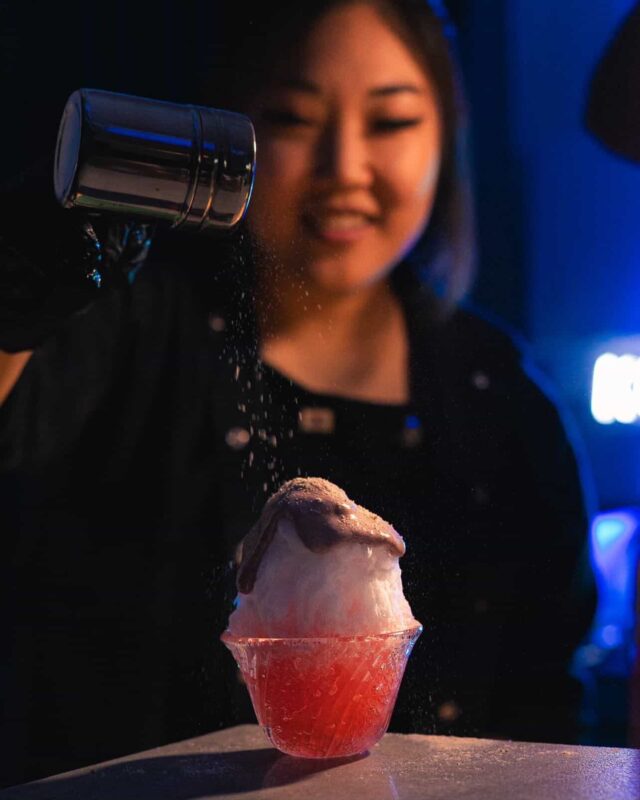 Q: Do you think we’re entering a divide between “experience-driven luxury bars” and “everyday accessible cocktail spaces”—and if so, what does that middle ground look like?
A: I don’t really see it as a divide anymore, it feels more like the gap between the two is narrowing to the point where they’re starting to blend.
The standard for what used to be considered an “everyday” cocktail bar has been significantly elevated. Better ingredients, more training, more intentional hospitality, and it’s raised the baseline across the board. At the same time, experience-driven luxury bars are becoming more aware of approachability and comfort, not just complexity and presentation.
Because of that, the distance between the two is getting smaller. You’ll still have extremes, but more and more, you’re seeing spaces that can exist in both worlds: offering craft and creativity without losing accessibility or warmth.
I think the most interesting direction for the industry is that overlap, where a guest can have something technically thoughtful and still feel like it’s familiar, welcoming, and not exclusive to a certain “type” of bar.
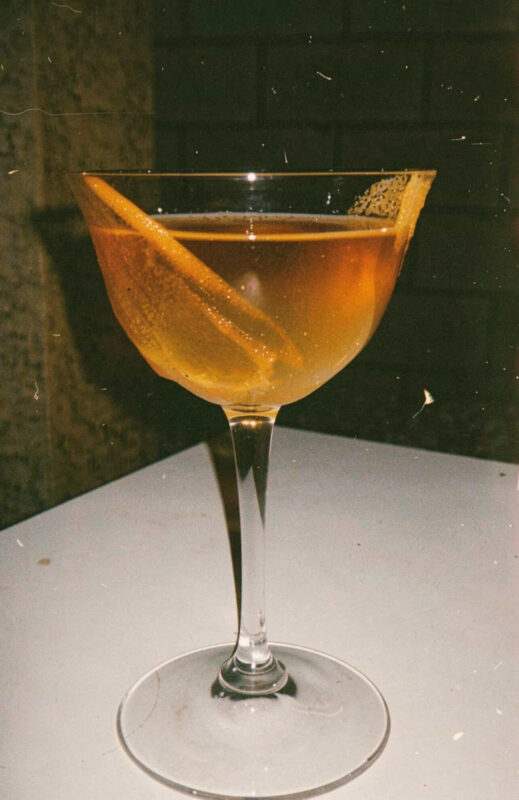 Q: When a cocktail reaches the price of a full meal, what exactly is the customer paying for in your opinion—craft, branding, location, or perceived exclusivity?
A: I think it’s a balance of all of it, and at that point it kind of weighs out equally.
Craft is what’s in the glass, but branding and location set the tone before you even order. Then experience and that sense of exclusivity shape how the moment feels overall.
When a cocktail hits the price of a full meal, it’s not just about the drink anymore, I think it’s the full experience around it, and each part plays an equal role in what you’re actually paying for.
 Q: You’ve talked about being introverted—how did stepping behind the bar reshape your identity, and what does that say about the role of discomfort in personal growth?
A: Stepping behind the bar didn’t change who I am so much as it expanded what I was capable of.
Being introverted, I’ve always been more observant than expressive, but hospitality naturally puts you in constant interaction: sometimes comfortable, often not. Over time, that discomfort becomes part of the job. You learn to communicate, read people quickly, and adapt in real time, even when it doesn’t come naturally.
I also learned that growth in this industry rarely happens in comfort. The moments that feel unfamiliar or challenging at first are usually the ones that build the most resilience.
At the same time, it gave me confidence, not just socially, but creatively. I became more comfortable expressing ideas, building drinks with intention, and sharing that work in a way that could inspire others.
So it didn’t change who I am, but it made me more adaptable, more confident, and more open in how I express both myself and my creativity.
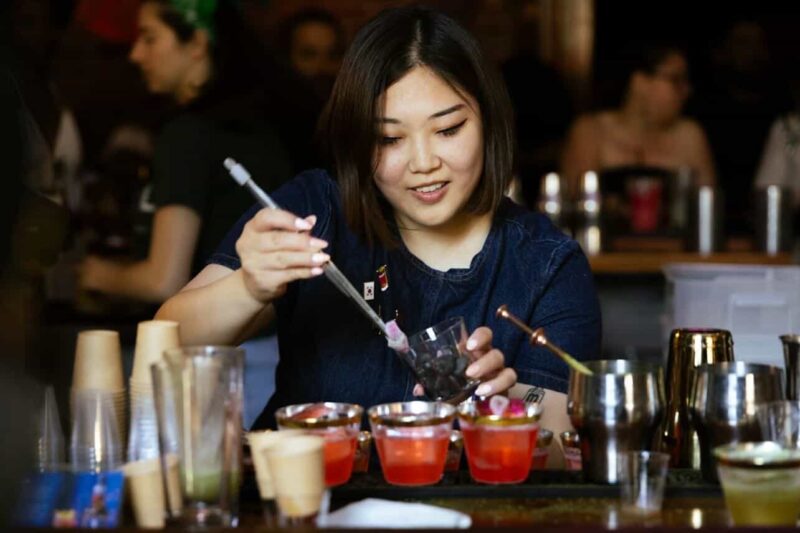 Q: If your work ultimately isn’t about cocktails, but about connection—what does success actually look like to you long-term?
A: For me, it’s about being able to travel and share what I’ve learned through cocktails, while also staying open to everything other cultures can teach me in return. Every place has its own rhythm: how people gather, what they drink, what they celebrate, and I love the idea that my work can be a small part of that exchange.
I also think a lot about the people coming into this industry who are still figuring it out. If my journey can show that it’s okay not to have it all mapped out, as long as you stay curious, keep showing up, and stay resilient, that feels meaningful to me.
At the end of the day, success is simple. It’s creating something in a glass that brings people together, sparks a moment of connection, and hopefully leaves them feeling a little more inspired than before they sat down.
 Q: Coming from your background in both technical craft and storytelling, how do you personally define “value” in a cocktail experience?
A: The value starts way before the drink ever hits the bar: in the inspiration, the R&D, the testing, and all those small adjustments that don’t always get seen. Then it continues in prep, where consistency and intention matter just as much, and finally into execution and hospitality, where it all comes together in front of the guest.
Each step carries its own value. And when there’s real balance between all of it, you can feel the care behind the drink. That’s what turns a cocktail into a full experience, and something that feels thoughtful from start to finish and stays with the guest long after the glass is empty.
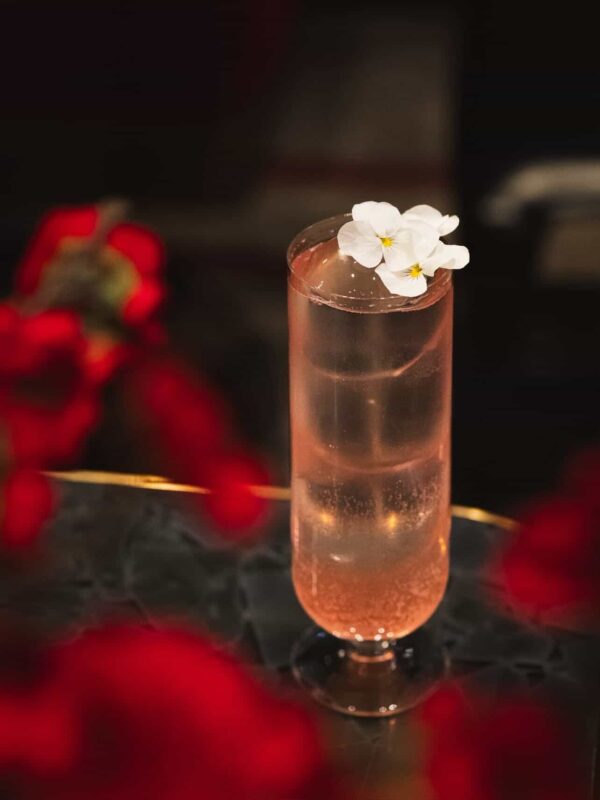 Q: Coming from Las Vegas—a city with some of the most intense hospitality and cocktail competition in the world—you’ve likely seen and experienced a lot of high-level bars. When you think about the most memorable cocktail experiences you’ve had, what are a few that stand out, and what actually made them exceptional in your mind?
A: My top pick at the moment would be Nocturno.
When I think about a great cocktail experience, hospitality is usually what carries the most weight, but it only really works when it’s backed by consistency in the glass. Every time you come back, the drinks should feel balanced, intentional, and executed at the same level. That consistency is what builds trust in a bar over time.
Nocturno does a really great job of tying everything together. The service, the food, and the overall experience all feel aligned in a way that doesn’t feel forced as it just flows. That balance across every touchpoint is what stands out most to me.
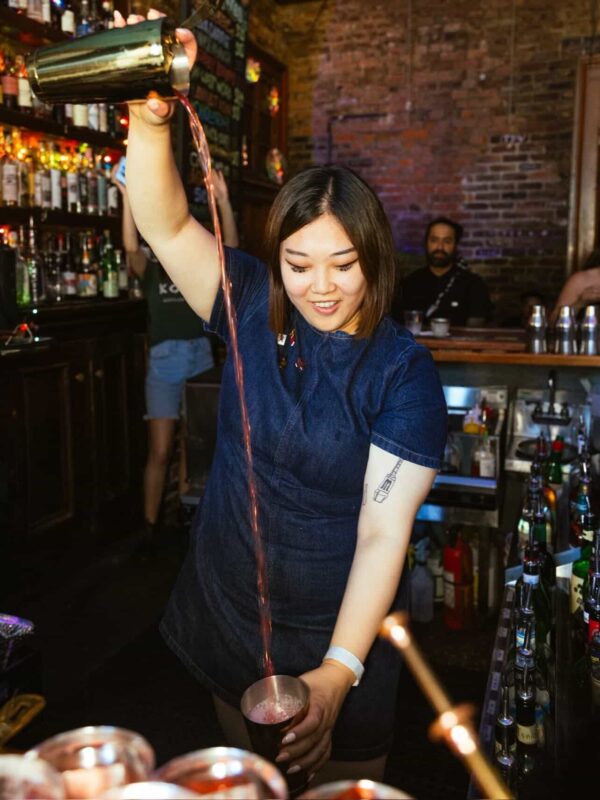 Q: When you look at your journey from Vegas to where you are now—across craft, culture, and an evolving cocktail industry—what do you think people are really searching for when they order a drink today: the drink itself, or the experience it represents, and how should the industry respond to that shift?
A: I think when people order a drink today, they are really searching for both the drink and what it represents, but the experience is what ultimately stays with them.
Looking at my journey in Vegas and across the industry, what has become more and more clear is how much of the value lives in the people behind the bar. The team, the different perspectives, the creativity, and the way all of that comes together in real time. The drink is just the final expression of that collaboration.
People can feel when there is intention behind it. Not just in technique, but in how a space is run, how a drink is built, and how it is served. Even something simple can feel meaningful when it is backed by that level of care and shared creativity.
I think the industry should continue leaning into that shift by protecting both sides: the craft in the glass and the human connection behind it. Because at the end of the day, people are not only coming out for what they drink, they are coming out for the energy, the people, and the moment that gets created around it.
 Conclusion
Throughout our conversation, one theme surfaced again and again: the future of cocktails isn’t really about cocktails.
It’s about connection.
While molecular techniques, luxury experiences, and ever-evolving drink trends continue to push the industry forward, Jennifer believes the most meaningful moments still come from something much simpler—a sense of belonging, a shared memory, a story told through flavor, or a brief moment of human connection across a bar top.
That perspective feels particularly relevant today. As consumers become more selective about where they spend their time and money, the bars that will thrive aren’t necessarily those serving the most expensive drinks or the most elaborate presentations. They’ll be the ones creating experiences people genuinely remember.
For Jennifer, success isn’t measured by awards, social media impressions, or even the perfect cocktail. It’s measured by whether a drink can spark conversation, inspire curiosity, or leave someone feeling just a little different than when they arrived.
In an industry built around hospitality, that’s perhaps the most important ingredient of all.