How did Karas Kustoms go from a machine shop in Mesa to one of the best-known names in EDC pens?
Bill Karas (owner) founded Karas Kustoms LLC in 2008 when he broke away from a partnership in another machine shop having worked as their shop foreman in charge of 150+ other machinists. Shortly after opening his own shop, he sought to fill machine time with some retail products, and with the help of Dan Bishop (industrial designer - former employee) they designed machined iPhone and iPad accessories, something that wasn't popular at the time. These products had crossover appeal with the EDC community because they were made out of metal (aluminum, brass, copper, titanium), and though we launched those on Kickstarter, they never fully funded but we were able to sell them on our website to enough people it kept us looking at other EDC products. We were paying attention to Kickstarter specifically with machined products, and with the launch of the Pen Type-A, we knew that we could design and manufacture a product that was similar but in our own aesthetic. We launched the Render K a month after Pen Type A launched, and it funded very quickly, and due to the fact that we controlled all of the prototyping and manufacturing, we were able to fulfill our Kickstarter before the Pen Type-A. Even before we'd finished machining the Render K, we had begun designing the Bolt (our follow up pen) due to the overwhelming response to the Kickstarter campaign as well as early reviews from pen bloggers and reviewers.
Your first pen launched on Kickstarter. What did that campaign teach you about your customers?
Kickstarter at the time was kind of the wild west, a mix of people who were just backing random campaigns because they were invested in the crowdfunding idea, other makers who were backing each other, and fans of niche products that didn't have large online marketplaces. The EDC community was one of those. This was pre-Massdrop and when sites like Cool Material were just blogs and not marketplaces. Kickstarter was a major focal point for purchasing EDC products because the online infrastructure really wasn't maximized for small sellers outside of eBay or PayPal links. We didn't see a real coalescing of definable EDC customers until we launched the Bolt at the end of 2010, but when we did finally launch the campaign funded VERY fast and ended up being far more popular than we could have imagined. Due to the fact that we had our own eCommerce site, we were able to track a lot of the customer segmentation, and at that time most of the Kickstarter backers were more EDC people than our native website customers.
Walk us through how one of your pens is made, from bar stock to finished pen.
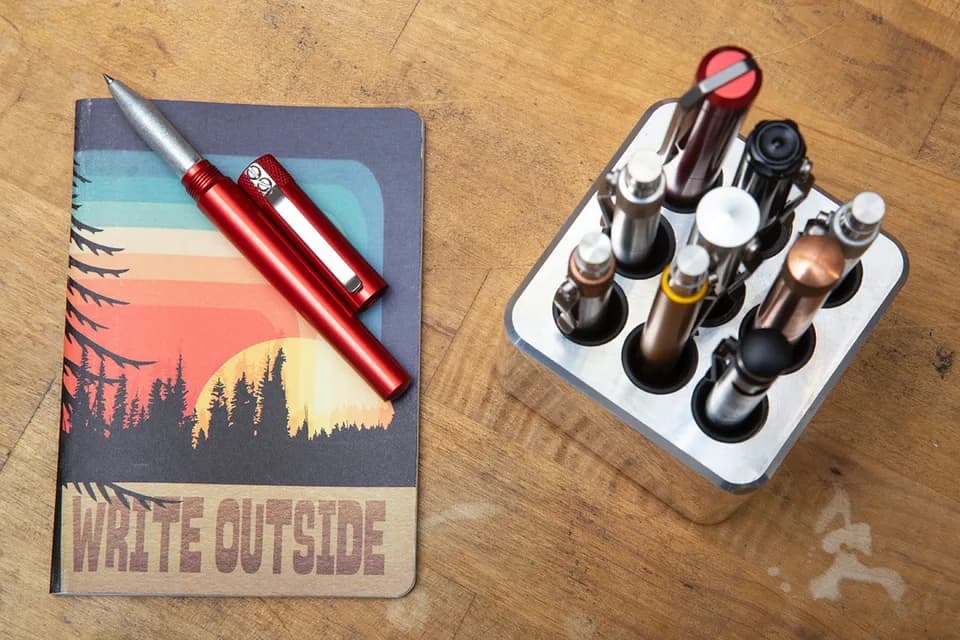
We now have a much more collaborative approach to designing and manufacturing a product for our retail business, especially the pens. Though we no longer employ a designer, and we have a small team (6 employees currently), we are often sharing concepts and ideas on functionality and form. Josh (shop foreman), Bill (owner), and myself (marketing but I'm also a pen nerd) will discuss product viability, internal product competition, aesthetic and functional design elements. Once that's been done, Josh and Bill will usually do rough prototyping in Solidworks or Fusion360, and often this will include one or two physical prototypes even in the early stages of this process. We started transitioning from larger turret lathes to Swiss lathes in 2016 which dramatically increased our machining capabilities, efficiency, product loss, and shortened our production times. Josh has also mastered these machines, and prototyping new pens or setting up a production run is far easier than it was in the past. Once the prototyping process is complete or the program has been proved out to be functioning correctly, we load 12 foot raw bars of material, usually we start with aluminum, and begin the manufacturing run. During that first few hours the machine is live, Josh will be checking parts against our a standard sample from the original machining run, or in the case of a prototype against his 3d model and all of his test gauges. The Swiss lathes make it so that raw barstock goes in, and completed parts come out that do not require a second setup or other machining. Swiss lathes are multi-axis machines with live milling as well as traditional lathes setups. We can accomplish all of the machining we need for completed parts whereas before we often utilized a mill with custom fixtures to machine secondary operations specifically where our clips attach to the pens. Though Swiss lathes shorten our machining times, we are still using raw barstock for all of our current pens rather than using pre-drilled tubing of any kind, which still requires longer machining times than some other companies, but we consider the results to be better in the longterm as well as producing pens that are more detailed and finished.
Why does machining everything in-house in Arizona matter to you?
Whether it's quality control, IP management, or ability to react quicker if we need to adjust production timelines; completing 95% of the manufacturing in-house gives us better peace of mind. It's also the reason we rarely do pre-orders anymore and we've moved away from Kickstarter completely. Since 2016, we've launched all of our products and an entirely separate brand outside of crowdfunding because we don't like having people's money very long before customers have their products. In terms of making items in-house, it's often cheaper for us in the long run especially factoring in overseas production. Due to the fact that we do still operate a B2B machine shop side, we often have to outsource parts of a manufacturing process, and that brings a different set of concerns with it while also pushing out completion ETAs and product quality concerns. Any product or process that we do not control is sourced as close to our shop in Mesa, Arizona. We use an anodizer in Tempe, Arizona. Our Cerakote applicator is in Gilbert, Arizona. We partner with a molding facility that is a 10-minute walk from our shop. Our screws, springs, and some refills are manufactured in Kentucky, New York, and Nevada, by companies we sought out to partner with due to their reputations. In circumstances where we do need to go overseas, we've partnered with well-known European companies who have worked with us to make parts to our specifications, like Schmidt Technologies in Germany that updated their SKM-88 click mechanism based on our requests. Bill adopted a motto a while ago of "Why pay someone to make something we can make, we might as well 'pay ourselves'". When it makes sense for us to make a part or even packaging, we'll do that especially if we have the capabilities in the shop.
What materials do you love working with, and which is the hardest to get right?
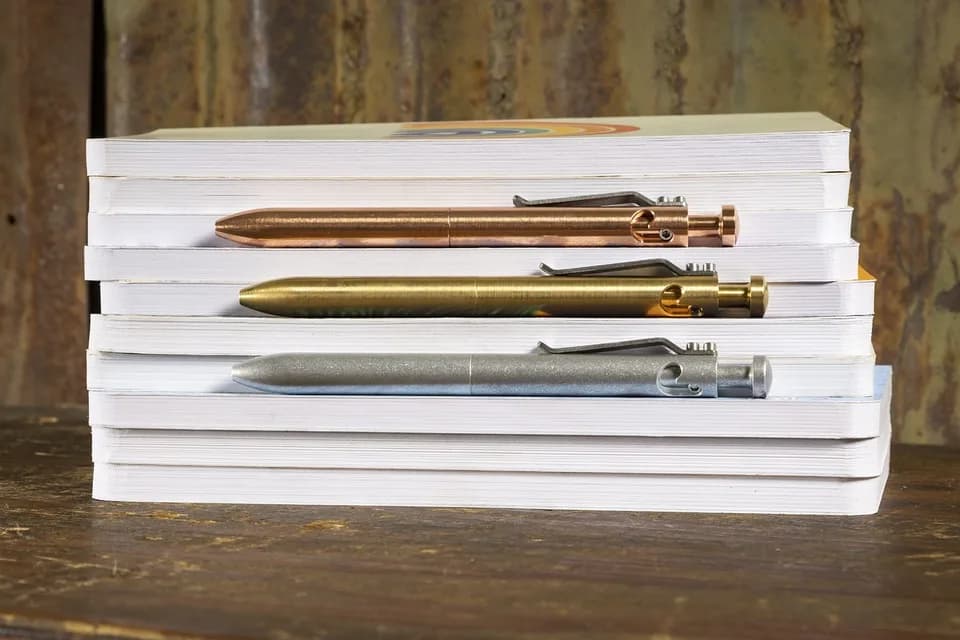
Brass is just easy to work with. It's easy to machine, easy to "fix" if it gets a bit dinged up, and for quite some time had a much higher margin because it was relatively inexpensive and we have less "production loss". We don't do a lot of exotic materials, though we're often asked by hardcore EDC fans for pens in zirconium, timascus, etc. That's just not our wheelhouse. Partially because we were one of the first companies to enter this market at this scale, we had to develop the pricing model that largely didn't exist. When we have dipped our toes in products that require considerably higher price points, there has been pushback, which always makes us wary to invest heavily in a product that might not sell due to the cost. Having said that, titanium is just finicky. It requires an extensive investment in both tooling and custom ground barstock to run in our Swiss lathes. We did titanium productions runs of the Bolt, EDK, and Retrakt in 2018 & 2019, but have since discontinued using titanium due to cost and the current market contraction in the writing instruments.
Which pen are you proudest of, and what's the story behind it?
The Bolt is our bestselling pen, and continues to be one of our most popular designs even with us adding a more traditional side-actuated bolt-style pen. While the Render K was our first pen, the Bolt was the pen that proved we could sustain a retail business as a company that made pens. The Bolt was our second pen, and we wanted to do a retractable pen, but wanted a very simple design that didn't have a lot of moving parts that could fail. The idea of a knob on the top that was thumb-activated rather than a large side button made more sense from an aesthetic standpoint. While bolt-action pens are functionally simple and durable, a lot of them in 2010 looked weird with the large side knobs or off-the-shelf screws being used. Our design for the Bolt was a way to make a retractable pen that really only failed if you damaged the spring or deformed the tip since it functioned mostly on simple physical movement and a machined positive "lock".
How do you decide what to make next?
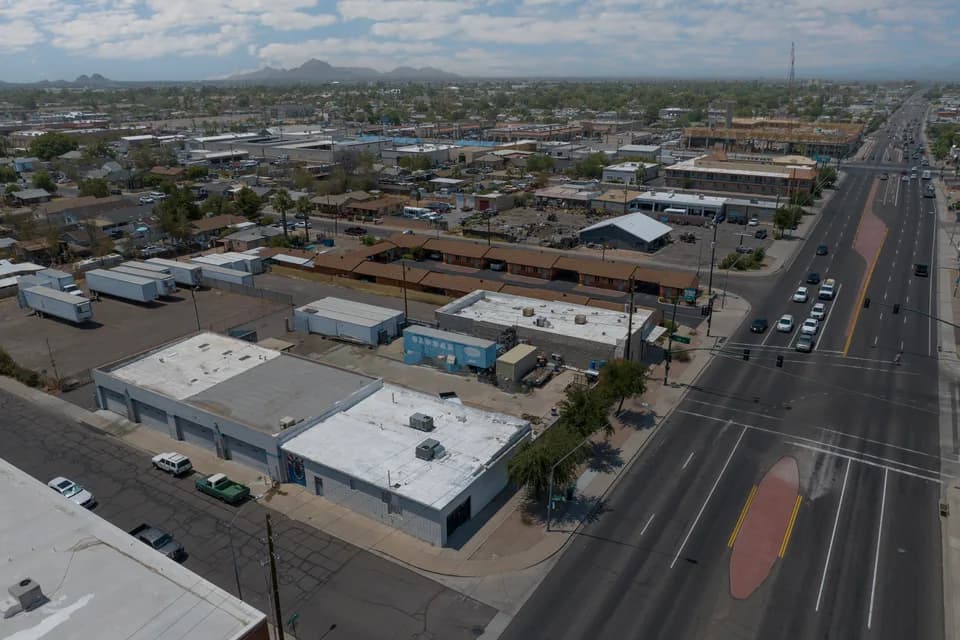
At least once a year, Bill and I will sit down and go over our full line up of pens for both Karas Pen Co and Everyday Karas. The goal is to see if any model has fallen below our threshold for its next scheduled production run and to see if there is a product missing in our catalog. This extends to non-pen products as well, since we've toyed with entering other retail arenas but we've yet to move forward with any of those plans. However, during the year, we'll often have an idea pop up that will spur us to look at doing a small prototyping run. That happened over the summer and we're currently prototyping a new mechanism for refill actuation based on a weird idea that Josh had. I am also constantly looking at refill trends and trends in the fountain pen community because those two areas that are easiest to monitor without spending every day in an online forum, something I don't mind doing, but don't have that time available to me due to my other jobs here at Karas. At the end of the day; we'll all sit down and give a thumbs up or thumbs down on moving forward with any of our ideas or at least prioritizing them. We have a lot of ideas that have been put on the backburner, but we may revisit in the future; and we go over those at least once a year to see if something needs to move up in priority order or taken off altogether.
The EDC community is very passionate. How do you stay connected with it?
Though we value the EDC community and how much it helped our success in the early days of our business, we are not nearly as present in the community as we once were. The community itself has dramatically evolved over time going from blogs and forums, to Facebook and Instagram, to YouTube, Reddit, and now Tik Tok. While we are active on many of those places, we're not as active as we once were. Some of that is due to our desire to produce products that are extremely durable but not solely built for the EDC arena. Our products fall into the durable, machined side of the EDC Venn diagram or graph, but not onto the tactical or exotic side of that diagram/graph. That's partly because we didn't start with the EDC community at the forefront of our minds, there support was a happy accident. Our first two pens were designed around the philosophy of "this pen COULD have been produced in the 1950s-1970s and wouldn't have looked out of place in a machinists toolbox at that time." We have been and still are very influenced by mid-century design and machining, and that is very evident in that aesthetics of our products. Because of that, we have a large external (non-EDC) following as much as we do an EDC following. It's definitely a balancing act now, the easiest way for us to connect with both sides is to engage with some of the leading voices in the pen community as a whole or the EDC community when it comes to releases or prototypes. We still send out 25-50 sample packages for any new release, or we attempt to. We have a growing list of voices we reach out to for feedback, and when we need to get more involved in terms of someone asking questions or making claims, more often than not one of our EDC customers will provide us with a link or connection so we can be more involved in the discourse. In all honesty, our unofficial "street team" of long-term EDC customers is probably our biggest form of assistance where any of that is concerned.
Gen Z and millennial customers are changing how people discover everyday carry. How are you reaching younger buyers, and what do they look for?
This is a really difficult question to answer because it's so multifaceted, and something I've been personally tracking since 2020 (specifically post-Covid). What we're seeing is that Gen Z and Millennial customers can only largely be lumped together due to their spending habits, which are far pickier than previous generations likely due to a lack of extra capital and fewer hobbies. They have different social media platform preferences. Different influencer preferences. Different preferences in terms of how they receive marketing communication. It's an ever-evolving landscape, and while we were making headways into staying in communication with both Gen Z and Millennials, there has been a massive exit in younger buyers (under 35) since 2021. This is something that has been proven in numerous surveys we've conducted internally with our newsletter customers as well as externally via two large surveys that were shared on Facebook and Instagram accounts run by other people; then backed up in the years since when we attended trade shows. Pre-2020 a large portion of new customers at pen shows were college aged or recent graduates and young professionals. They were entering the pen buying community and very active, making up a significant portion of our new customer base, upwards of 30% of our online customers and well over 50% of our customers are pen shows and in person purchases. That demographic is now less than 15% of our online customer base and has dramatically shrunk at pen shows and in person. The best we have come up with is staying engaged on Instagram, and sending out as much product to Tik Tok creators as possible, while at the same time trying to identify the next social media platform and adopting it as early as possible, something we did not do with Tik Tok, unfortunately.
Our readers love whisky and cigars. What would you pour, and what would you smoke, while writing with your favorite Karas pen?
I am a huge whisk(e)y fan, with over 200 bottles in my personal bar, I don't call it a collection because they're almost all open and anyone who comes by can sample anything in my cabinet. As such, I can't just pick one, so I'll give you a few of my favorites. Two bottles I will almost always reach for if I can't decide and just want something good, Pursuit United Triple Batch Rye 108 or Sagamore Spirits Double Oak Rye. Just great rye options, especially for a bourbon fan. If I want Scotch, I know this might be controversial, but I LOVE Campeltown Lock Blended Malt, it has a little of everything I want in a Scotch. If I'm celebrating, I was lucky enough to get a fantastic Brook Hill 10-year bourbon that I'm trying to slow sip cause I'm not sure when I'll find another one. As far as cigars, I'm not the biggest cigar person, though I do enjoy an AJ Fernandez New World Connecticut that my old buddy from the Army sent me. I usually smoke a pipe, I have a few Nordinig pipes that I love, and usually grab a custom blend of tobacco from my local Stag Tobacconist.
What's one thing about American manufacturing you wish more people understood?
It's rarely about the money or getting rich, but more about the mindset of coming to work and making something that you care about. My dad was a machinist in small shops (and big companies) his entire life. I grew up around that, and how he loved what he did especially at the smaller shops. Bill became a machinist because he's been customizing older Volkswagen's since he was in high school and finding parts was often hard. He was frequently told "if you want that part, you'll have to find a machinist". That means much of our work is personal. Our B2B customers are people we have relationships rather than big corporations (though we have done work for them before). Bill is one of the most talented machinists I've ever met, he could still be the head of a large machine shop or manufacturing facility and probably be making far more money. But the freedom to come to work when he wants, work on what he wants, spend the requisite time and effort that his work ethic demands on a product is only really something he can do as a small American manufacturer.
What's next for Karas Pen Co.?
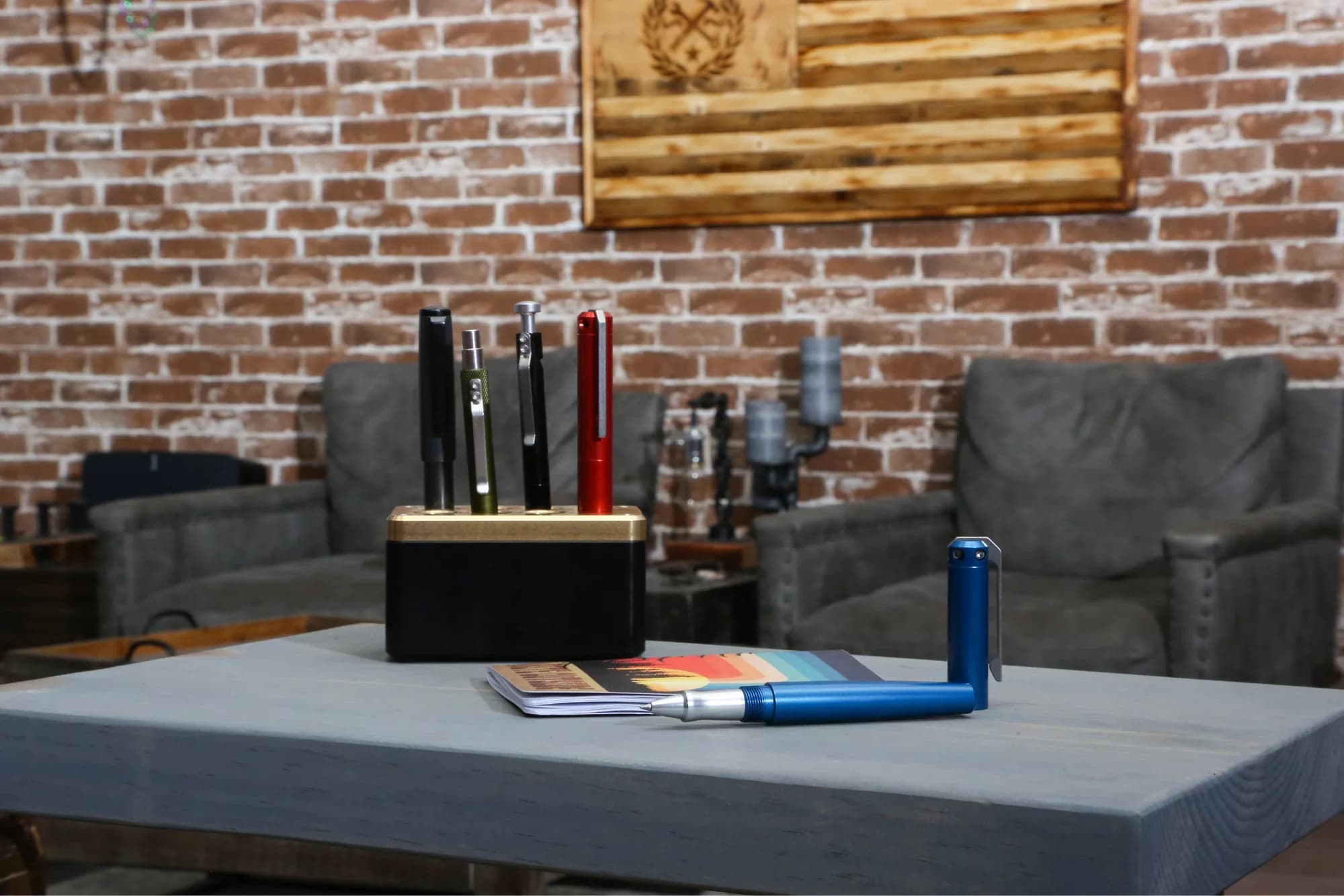
We're working on a new pen, a new pen holder, and several non-pen products, and constantly looking for new ideas. We have a plan for expansion next year into an entirely different retail market, and we're doing a lot of research into trends, branding, and product development for that potential move. Mostly, we're trying to get caught up and in stock on a lot of our legacy products, which is a constant when you're a small manufacturer.