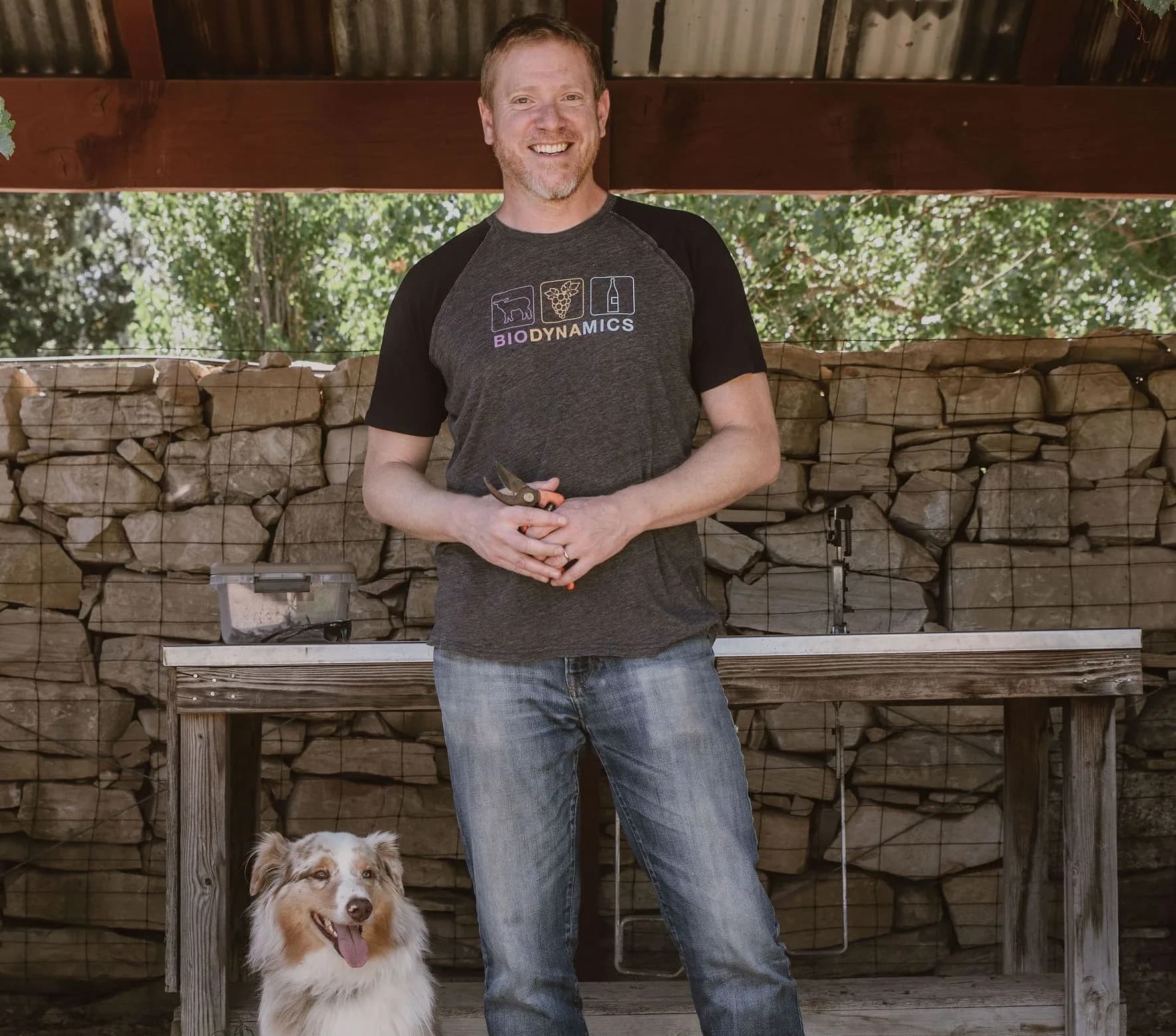
Tablas Creek started as a partnership between the Perrin family of Château de Beaucastel and your family. How did that come together?
My dad was an American wine importer of mostly French wines, who made his name in the 1950s and 1960s importing mostly wines from Burgundy and Bordeaux. By the late-1960s he had decided that the future of wine importing wasn't carving up those two regions finer and finer, but instead in finding other regions that offered quality and value, and trying to find a producer whose wines he could use to introduce the entire region into the US market. That was how he ended up in the cellars of Jacques Perrin at Chateau de Beaucastel in 1967. He was able to convince Jacques to appoint him their American agent and also to agree to lend him his two sons to travel around America to introduce the wine trade here not just to Beaucastel but to Chateauneuf-du-Pape and the Rhone Valley more generally.
On those trips, my dad and the two brothers (Jean-Pierre and Francois Perrin) became friends. Every time they would go to California, they would leave talking about how much it reminded them of the south of France, and wondering why in this Mediterranean climate they didn't see any of the new wineries focusing on the grapes they knew and loved. By the mid-1980s they'd dedided to take a crack at doing it themselves.
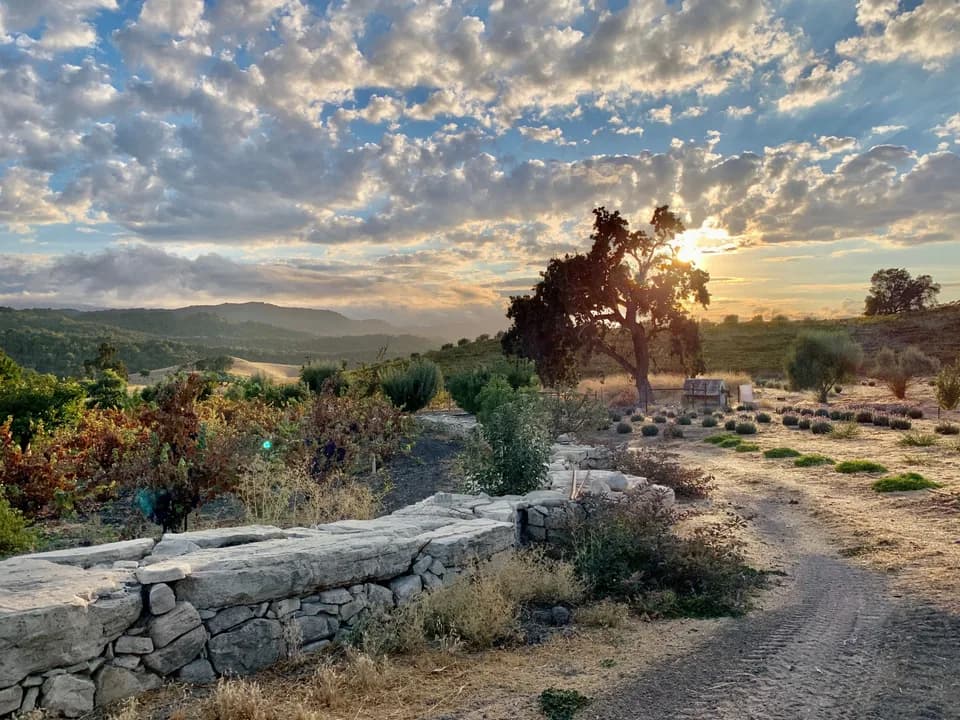
What did it mean to become the first Regenerative Organic Certified winery in the US?
It was hugely important. Regenerative Organic Certified (ROC) brought together all the things that we thought mattered in a certification, and filled in the gaps in the other programs that we'd investigated or participated in over the years. So when we were asked if we'd be a part of the pilot program, it was an easy yes. And seeing the rapid adoption since -- they're over 20 million acres certified -- has reinforced that it was the right criteria at the right time. A part of being in the pilot program was agreeing to share what we learned through the process, and it's been amazing seeing all the wineries (over 300 at this point, six years later) who have come to see what we're doing and apply the lessons we've learned. Only one entity can be first at anything. We couldn't be prouder to be first at this.
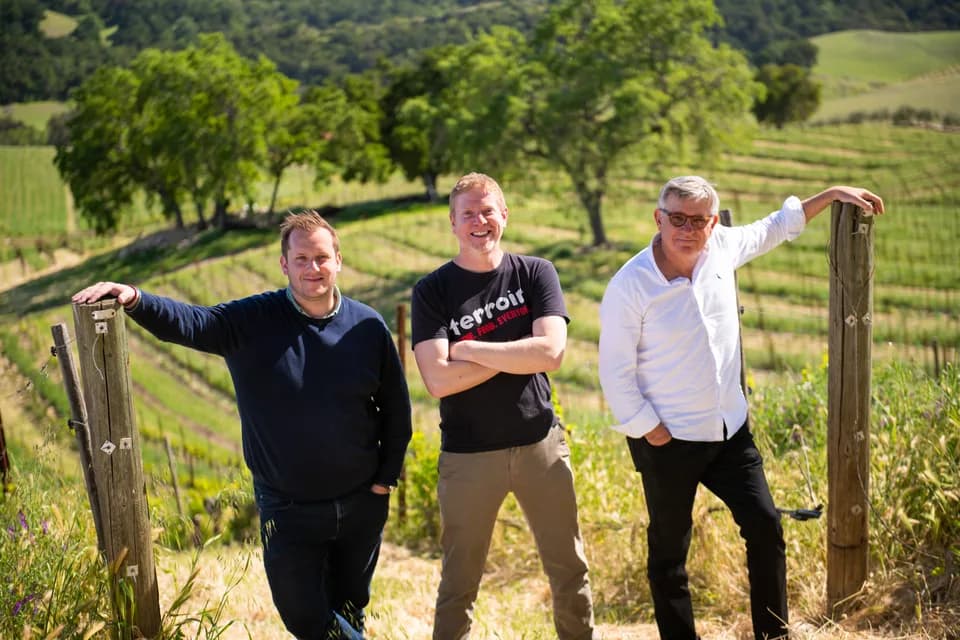
Explain regenerative farming in plain English. What happens in your vineyard that doesn't happen elsewhere?
Regenerative farming, in plain English, is farming in a way that has positive impacts on your soils, your people, your neighbors, and the broader environment. It is in many ways a rejection of the idea that sustainability -- the idea that you're working to mitigate harms -- is enough. That said, there is an expansive toolkit that qualifies as regenerative farming, and not every tool in that kit is going to be appropriate in every farm or every environment. But some of the things that the approaches share includes the elimination of chemicals, the fostering of biodiversity, the reduction of tillage in the interest of preserving soil structure and the soil microbiome, and the integration of grazing animals. Essentially, regenerative farming is working to create a vibrant, resilient, biodiverse ecosystem within which you can produce a crop.
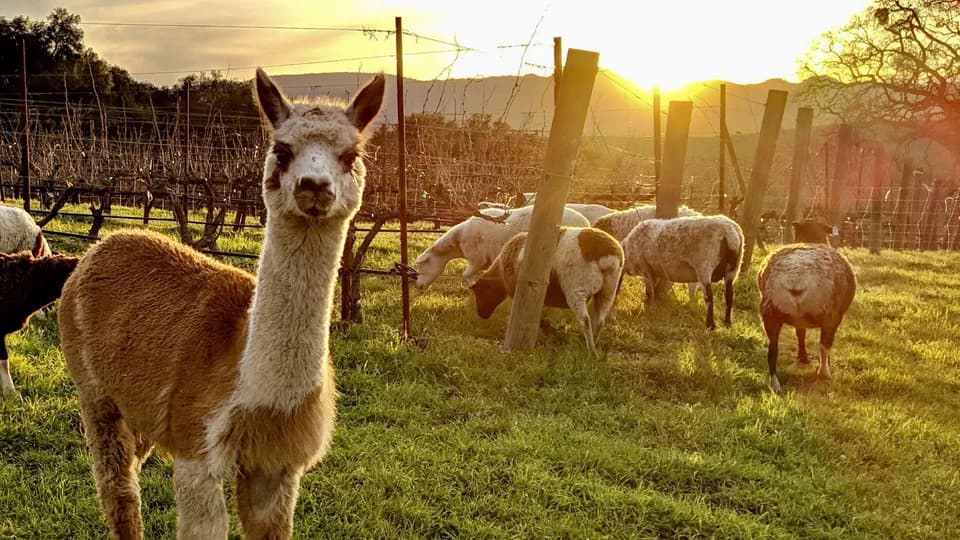
Tell us about the sheep and alpacas. Are they really part of the farming team?
They are! Though to be fair, it's mostly sheep for us at this point, as we've got like 200 of them and only one alpaca. As for why they're important parts of the farming team, it boils down to that there aren't many ecosystems that are healthy without grazing animals. Those grazing animals play a critical role in nutrient cycling, eating the grasses and other surface plants, composting them into manure, and spreading that nutrition around their ecosystem. Here at Tablas, we practice mob grazing, where the entire flock is kept in a relatively small (1-2 acre) area and then moved frequently, every 24-48 hours. That ensures that they service the whole vineyard on a plan and don't overgraze anywhere. And the impact is substantial! A flock of 200 sheep drops about 750 pounds of manure a day. That's a huge amount of nutrition, delivered naturally, without having to run tractors and compact the ground. Plus they instinctively graze low down (where the soils and grasses are thickest) and rest up high (where they feel safest) and so act to counter erosion. We only have 6 months where we can do this, from when we finish harvest to when budbreak begins, so we've got to make the most of it. But if you do the math, in those ~180 days, the flock spreads nearly 70 tons of manure around the property. That has a huge impact.
Why Rhône grapes in Paso Robles, and which one should more people be drinking?
There's a reason people talk about California being a Mediterranean climate. And the Rhone grapes, which evolved and spread around the Mediterranean, are extremely happy here. It's great not having to hide the grapes (as you often hear when American vintners talk about Burgundian varieties) in foggy coastal pockets, but instead can just stick them on a sunny hillside and let them do their thing. That's for me the ultimate test of appropriateness. As for which one people should be drinking more of, I'll point to the broader category of high-acid white Rhones, which is headlined by Grenache Blanc but also includes Picpoul Blanc, Picardan, Clairette Blanche, and Bourboulenc. All these are still pretty obscure here, though Grenache Blanc is getting less so, but they all thrive and provide a lovely counterpoint to the lusher grapes like Roussanne, Marsanne, and Viognier.
Gen Z and millennials care about sustainability but also price. How do you make responsible wine affordable?
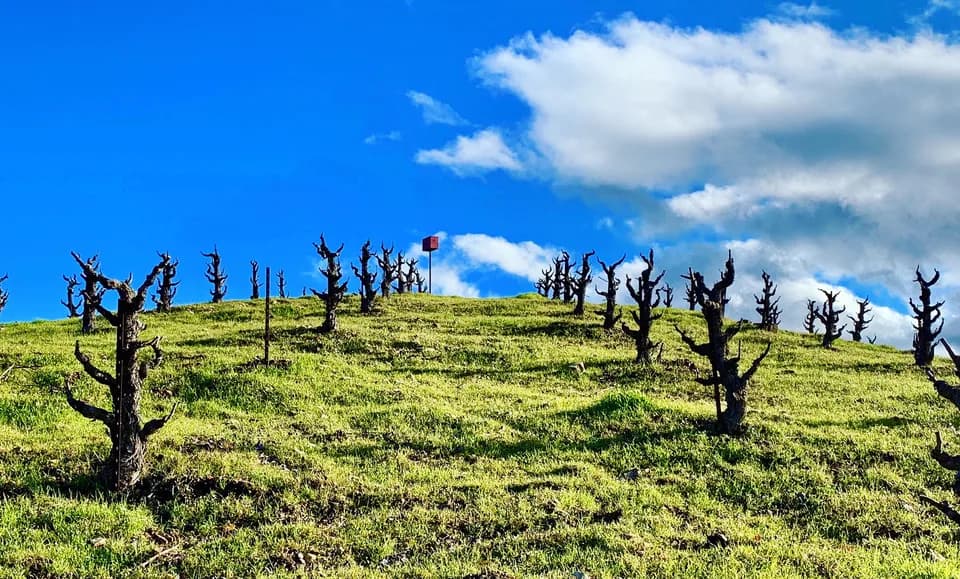
I think about this a lot. I also think that this moment, where vineyards are struggling to sell their grapes, is a real opportunity in this regard. A lot of it is looking outside some of the most fashionable (and expensive) regions to find reasonably priced grapes, and then offering your help in having them farmed better. For example, in 2021 we announced to all our growers that in five years we would be buying exclusively from organically farmed sources, and offered our help for anyone who wanted to make that transition. We were able to get there two years early, in 2024. And in 2025 we started working with a vineyard in Lodi specifically because they were the first ROC vineyard in their region. The truth is that it's not much more expensive to farm regeneratively, as has been shown so convincingly by the Regenerative Viticulture Foundation's One Block Challenge, so if the market demands it, the farmers will change. Meanwhile, it's a real opportunity for those who want to be early adopters.
Your blog is famous in the wine world. Why has transparency been so central to Tablas Creek?
I realized early on that we had set ourselves a really difficult challenge. We were making blends (that didn't have a place in the market), from grapes that people didn't know and couldn't pronounce, in a part of California they hasn't heard of, with French names that didn't mean anything to them. That's a lot of strikes against us. But I decided that one way to overcome all that was to get people behind the curtain and into our world. If we could communicate why we found these things so compelling, we'd be most of the way there. The blog was just one tool in this. I started it back in late 2006, without really knowing what I was doing, and have kept it up because it's been a great creative outlet for me, and because I found that I could be a part of bigger conversations happening in the world of wine. I also started making connections with other writers, which has been good for the business. And now, with social media, the tools are available to anyone. But I still thing that long-form blog articles are a great way to introduce topics and opinions and am honored that so many people want to read them each week.
What's the most underrated bottle in your lineup?
Underrated is such a difficult thing for me to assess! But I guess the hidden gem in our lineup is the Cotes de Tablas tier. When we introduced it in the 2000 vintage, it was our entry point, with the Esprit de Beaucastel (called since 2011 Esprit de Tablas) as our reserve tier. When we launched the Patelin de Tablas tier in 2010, in order to have a reliable wholesale and by-the-glass option, my dad warned that it would make the Cotes de Tablas more difficult to sell, but we decided to do it anyway. And even as the Cotes de Tablas wines get better and better (they're now getting consistent mid-90s ratings) they remain tough to sell, even at the smaller quantities that we're making. It's sort of a "how do you get the middle child attention" challenge that we haven't totally figured out. But it's a sweet spot for me, these $40 estate wines that get all the care and love of our flagships.
How is climate change shaping your decisions in the vineyard?
It's daunting. The climate has changed so much in the 30 years we've been making wine here, and knowing that the next 30 years is likely to see at least as much change means that what we're planting now has to be ready for a dramatically different future. That's been part of our drive toward regenerative farming, as it addresses both the causes and effects of climate change. We've also been planting with less density, so that the vines have more cubic yards of soil to draw from, experimenting with how we leave more canopy, to provide shading, and working to wean ourselves off of ground water as well as off nonrenewable energy. But it's an ongoing process.
What's your take on alternative packaging like boxes, cans or lighter bottles?
We are huge proponents. We've used reusable stainless steel kegs to sell to restaurants and wine bars since 2006. We lightweighted our glass bottles in 2009, and again in 2024. We introduced high-end boxes of wine in 2022, and got a ton of press for doing so. Anyone who has done a greenhouse gas audit of their winery business realizes that packaging is where you have to look to reap real savings, as the glass bottle accounts for half the industry's carbon footprint. So we've looked as what we can do as broadly as possible, and are willing to spend some political capital to help destigmatize packages that maybe have been associated with lower quality wines. I like to say that it's not the box's fault that most boxed wines have been lousy. The wine was lousy before it ever went in the box because it had to hit a price point that was only going to be possible through industrial farming and winemaking.
What's the best pairing for a Tablas Creek red blend on a weeknight?
We're getting into early winter here in Paso Robles, so I've been thinking about this recently. There's a great Alice Waters recipe for braised short ribs that I feel like I make at least once every November. Anything braised is a great pairing for Mourvedre, which many of our flagship blends are based on. I'm not sure it's an easy weeknight recipe because it does take like 3 hours to cook, but it will be a memorable pairing.
Where do you see American wine heading in the next decade?
I think there's a shakeout happening right now. For 50 years, you didn't have to be doing a great job to be successful. The American wine market was growing steadily, so if you were doing an average job, you were succeeding. That's a remarkably long time for an industry to be in growth mode, so it's not really in anyone's career to deal with the pullback we've seen the last three years. So in 10 years, I think you'll see maybe 25% fewer American wineries than there were at their peak, but they'll be better businesses, better farmers, more transparent about their practices, more conscious about what distinguishes them from the herd, and more collaborative in their marketing. It won't be easy getting there. But I think American wine will be better for it in the long run.