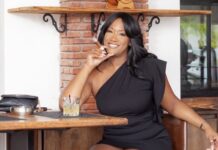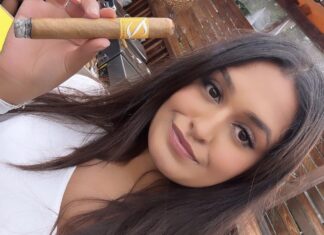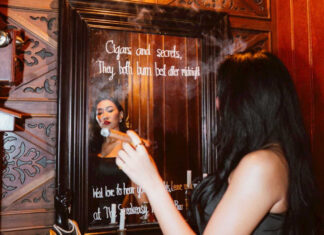






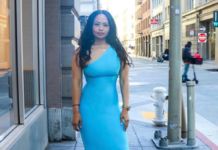
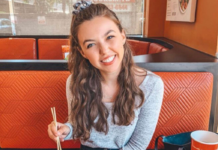

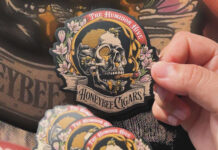
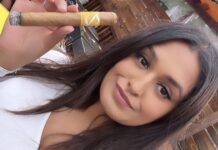

In an industry rooted in tradition, hierarchy, and long-standing rules, Bri—the founder of HoneyBee Cigars—is quietly rewriting what it means to belong. Her presence doesn’t demand attention in the conventional way; it draws people in through energy, intention, and authenticity. What she’s building isn’t just a cigar brand—it’s a living, breathing ecosystem of people, stories, and shared experiences.
HoneyBee Cigars exists at the intersection of legacy and evolution. Inspired by early memories of culture-rich environments in Tarpon Springs, Florida, Bri carries forward a deep respect for craftsmanship while reshaping how cigars are experienced today. The brand doesn’t just honor the past—it translates it into something modern, inclusive, and emotionally connected.
At the core of HoneyBee is the concept of “The Hive”—a community-first approach that prioritizes connection over exclusivity. In a space that often feels closed off, Bri has built something open, welcoming, and intentional. It’s a reflection of her belief that cigars are not just about flavor—they’re about presence, conversation, and shared moments.
What sets HoneyBee apart is its balance. There’s softness and strength, elegance and edge, intimacy and scale. Bri leans into duality—what she calls “sweet with a sting”—creating a brand that resonates with both seasoned cigar enthusiasts and a new generation entering the culture.
As HoneyBee continues to grow, so does its impact. From small-batch cigars to curated events and mobile cigar experiences, the brand is expanding beyond product into something much more powerful: the creation of moments people can feel, remember, and carry with them.
Q&A with Bri, Founder of HoneyBee Cigars
 Q: Bri, You grew up around cigars because of your father—what’s a specific memory from that time that still influences how you build Honey Bee today?
A: I grew up around cigars through my dad down in Tarpon Springs, Florida, right on the sponge docks. Some of my earliest memories are watching him spend time with the Cuban rollers—sitting waterside, drinking Cuban coffee, smoking cigars, and just being fully present in that environment. There was always this mix of culture, conversation, and craftsmanship that felt natural to me from a young age. I also spent a lot of time in his shop, and what stood out most wasn’t just the cigars—it was how he treated people. My dad is the kind of person who’s friends with everyone. Very down to earth, very charismatic, and always the “make it right” type of business owner. That level of care, respect, and connection left a lasting impression on me. It’s not one specific moment that shaped HoneyBee—it’s the feeling of those days. The energy of being outside in the sun, surrounded by people, food, culture, and cigars being rolled fresh in front of you. That experience taught me that cigars aren’t just a product—they’re about connection, presence, and shared moments. That’s something I carry into HoneyBee today. It’s not just about what we make, it’s about how it makes people feel.
 Q: When people doubted you early on, what part of their doubt actually stuck with you—and how did you consciously unlearn it?
A: Early on, most of the doubt came from people who didn’t understand what I was trying to build—traditional cigar guys, outsiders, and even my own father. The biggest thing I kept hearing was that if I didn’t go the typical route—owning a shop or a lounge—it would be too hard, or that I wouldn’t be taken seriously. I think the part that actually stuck with me wasn’t the doubt itself, but the idea that there was only one “right way” to succeed in this industry. For a while, that got in my head. I questioned if I was doing things the wrong way, or if I needed to fit into a structure that didn’t really feel like me. What I had to consciously unlearn was that mindset—that success had to look like everyone else’s version of it. Everything they said ended up fueling me, but more importantly, it taught me to trust my own direction. I stopped trying to fit into someone else’s box and started building my own. That’s really where HoneyBee came from—the idea of creating a space, a “Hive,” for people who think differently, move differently, and don’t necessarily follow the traditional path. Once I leaned into that fully, everything started to align.
 Q: You build your brand around legacy and family—how do you make sure that message stays authentic as the business grows and becomes more commercial?
A: For me, it always comes back to people. HoneyBee was never built to be exclusive it was built to give people a space to feel like they belong. The Hive welcomes everyone, and that sense of community is always going to come before anything else, even as the business grows. When you look at a beehive, every role matters. You have different parts working together toward one shared purpose, and that’s how I see HoneyBee. It’s not just me—it’s the ambassadors, the collaborators, the people behind the scenes, and the community that supports it. Everyone plays a role in building what this is. As things become more commercial, the way I keep it authentic is by staying close to that foundation. I still move with the same intention I started with; love for the leaf, love for the culture, and genuine connection with people. That doesn’t change just because the scale does. I also make it a point to recognize the people who helped build this. The “Hive” isn’t just a concept—it’s real. There are so many individuals, on and off social media, who believed in HoneyBee early and continue to be part of its growth. That’s family to me. As long as that energy stays at the center, the brand can grow without losing what made it real in the first place.
Q: “Small but powerful” is at the core of Honey Bee—when was a moment you felt small in this industry, and how did you turn that into leverage instead of insecurity?
A: “Small but powerful” really is the core of HoneyBee. A single bee is tiny on its own, but when bees come together, they build something much bigger than themselves—a hive, a system, a community. That’s how I’ve always seen my place in this industry. When I first started, I genuinely had no idea what I was doing. That first year was very much me stepping into the unknown—launching something, figuring it out as I went, and growing into a completely new version of myself. There were definitely moments where I felt small, especially being a younger woman in a very traditional space without the typical background or structure people expect. What could have turned into insecurity actually became leverage for me. Because I didn’t come in with a fixed blueprint, I was able to build my own. I moved differently, took risks, and created opportunities where there weren’t any—like launching an ambassador program early on and giving people a chance to grow alongside me, even when I was still learning myself. There are still moments where I feel small—it keeps me humble—but I’ve learned not to let that feeling stop me. I just keep putting one foot in front of the other, staying focused on the bigger vision. I’m the Queen of the Hive, the bees need me but most importable note is that the Queen stands small without her swarm! It’s that constant reminder I may be inspiring others to keep going or to follow their dreams without hesitation. The hive stands tall. I’m here and we ain’t goin nowhere, baby! Over time, that one “small” start turned into a Hive—people who believed in the brand, supported it early, and continue to grow with it. That’s what gives it power.
 Q: You’re bringing softness—love, kindness, intention—into a traditionally masculine space. Have you ever felt pressure to harden your brand to be taken seriously?
A: I’ve always been naturally soft—kind, observant, and in tune with my compassionate side. I never felt the need to force my presence. But I also come from a strong background, and I’ve always been a bit of the underestimated one. There’s a deeper, spicier side to me that people don’t always see right away but it’s always been there. Coming into a traditionally masculine industry, there’s definitely an unspoken pressure to harden up to be taken seriously especially as a woman. I felt that early on. You quickly realize you can’t always show up the same way and expect to be received the same way. As a younger, woman-led independent brand, I came in with a more modern perspective—and a little bit of controlled chaos. But instead of losing that softness, I learned how to refine it in the industry. We all have different ways we respond to pressure—different ways we “harden”—and for me, it wasn’t about becoming someone else. It was about stepping more fully into all sides of who I already was. HoneyBee became that expression—a balance of both sides, without one outshining the other. There’s intention, care, and community at the core, but there’s also edge, presence, and confidence behind it. I describe it as “sweet with a sting.” Honey can be soft, smooth, and inviting—but it also has depth, heat, and intensity. That duality is what makes the brand real. At the end of the day, I move as a sweet rebel—doing things differently, on my own terms. So no, I didn’t harden my brand—I evolved it. I stepped into my true calling—a deep, loving queen. You can take that in different ways… sometimes it’s soft, sometimes it’s a little tougher but it’s always intentional. The sweet girl next door just learned how to carry a little sting!
 Q: Community is a huge part of “The Hive”—but building community at scale is hard. How do you protect that intimacy as more people come in?
A: It starts with trust, but it’s really driven by motivation and alignment. You have to motivate the right people to be part of something and that only works if the energy is real. I’ve always been someone who keeps my circle tight. The people who are with me are the ones who’ve been there from the beginning—the ones who genuinely rock with me. I’m very private off social media. I keep to myself, I move quietly, and I value my space. That’s where my heart is. That’s where I stay grounded. Because of that, I’ve learned that intimacy doesn’t come from constant access—it comes from intention. I choose my energy carefully. And as HoneyBee grows and I take on more, that intimacy becomes harder to maintain because I’m so hands-on in everything I do. It’s me behind it. So I’ve had to learn how to step back at times—reconnect with myself, spend time outdoors, and stay aligned with something bigger than just the business. That balance is what allows me to stay open without losing myself in the process. And when it comes to the Hive, I protect that same feeling. Not everything is meant to be scaled in a traditional way. That’s why I bring people together physically through Boutique Cigar Society events. It creates a real moment and something people can feel, not just follow online. As we grow, the scale and the intimacy have to move together. One can’t exist without the other. Because at the end of the day, community isn’t just built—it’s maintained through intention, energy, and the people who truly belong in it.
 Q: You work with artisans and small-batch production—how do you decide when to stay hands-on versus when to let go and trust others with your vision?
A: Honestly, part of it comes down to where I’m at in the build. HoneyBee isn’t at a place where we’re rolling in big budgets yet—and that’s okay. This is my full-time focus, and I’m growing it in real time, step by step. Because of that, being hands-on isn’t just a choice—it’s how I stay connected to everything I’m building. I need to feel the flow of it; the people, the product, the process. That’s how I protect the integrity of the brand. At the same time, I do believe in creating opportunities for others. When I’m ready to bring people in, the first ones I look to are the ones who’ve been rocking with me from the start. As things grow and I’m able to expand, I’ll build a small, intentional team from there. I’ll let up where it makes sense—but I’ll never fully step away. This brand is personal to me, and I’m passionate about every part of it. At the end of the day, there has to be a clear vision, and I’m responsible for protecting that. So I stay open and collaborative, but I always have the final say when it comes to the integrity of my brand.
 Q: Every cigar tells a story—has there ever been a blend or concept that felt too personal or risky to release, but you did it anyway? What happened?
A: Honestly, I’ve never held anything back. Every cigar I release is personal in some way. The name, the blend, the feeling behind it—it all ties back to a real moment or story in my life. I’ve put out cigars that come from very different places. I have one named after my wild aunt—bold, strong, and full of character. Then I have Tupelo Miel, which means Tupelo Honey in Spanish. That one came from a much deeper place. It was fueled by love—by an angel—and the feeling of being surrounded by that energy. It was smoked at a gathering celebrating two people, and that moment stayed with me. My sweet honey; it’s love. That kind of release can feel risky, because it’s real. It’s emotional, it’s tough in its own way, and it comes from a place that people don’t always see. But to me, that’s the point. If I ever held back or tried to make something less personal, it wouldn’t carry the same weight. The cigars wouldn’t have the same depth. I believe the most powerful things you create are the ones that make you feel something—whether that’s love, memory, or passion. So I don’t shy away from that. I lean into it. Everything I release is intentional, and it comes from a real place. That’s what gives it soul.
 Q: Beyond flavor, you talk about emotion—what’s the difference between someone liking your cigar and someone actually connecting with it?
A: There’s definitely a difference. Liking a cigar is about the experience—how it smokes, the flavor, how it feels in the moment. You can enjoy a great cigar without knowing anything behind it, and that’s part of the beauty of it. But connection is more personal—and it doesn’t have to look the same for everyone. Someone doesn’t have to connect to a cigar the way I do, or to my lineup. The way I experience a cigar, the environment I’m in, the emotions tied to it—that’s my journey. Someone else might connect to it in a completely different way, in a different setting, at a different moment in their life. And that’s what makes it powerful. Each cigar carries the outline of where it came from—the story, the intention—but once it’s in your hands, it becomes your own experience. It’s about that moment of escape, that nostalgic feeling—whatever that means to you. So I love both. If you like the cigar, that’s a win. But when you connect with it—even in your own way—that’s when it really stays with you.
 Q: From the outside, this looks like a beautiful brand—but what’s a reality of running Honey Bee that people would struggle to handle if they were in your position?
A: From the outside, it can look beautiful—but the reality is, it’s a lot to carry. I’ve never been shy about how hands-on I am. Behind HoneyBee, I’m still a daughter, a friend, a dog mom. I’m balancing real life while running a business across multiple avenues. It can be incredibly fulfilling, but it’s also mentally and emotionally demanding. What people don’t always see is the constant movement behind the scenes. The decisions, the pressure, the problem-solving—it never really shuts off. As an LLC owner, you’re responsible for all of it, and that can get exhausting. I also process things a little differently. I’ve learned that I’m much stronger in how I express myself through writing and creative direction than I am in fast-paced verbal environments. I’m very raw, very honest, and very intentional—but I take my time with it. That’s actually shaped a lot of how HoneyBee shows up—through design, storytelling, and bold, intentional messaging. So while that can be challenging in certain settings, it’s also become one of my strengths. I think a lot of people assume it’s all good days, all wins—but that’s not reality. You have to stay focused, especially on the days that feel heavy, uncertain, or unclear. It’s not an easy path. You have to really want it. But if you have the passion and the heart for it, you keep going. Even on the tough days, there’s something that reminds you why you started. You learn how to push through, how to stay grounded, and how to keep moving forward. Because at the end of the day, this isn’t just something I do—it’s something I’ve committed myself to fully.
Q: You’ve expanded into experiences like mobile cigar bars—at what point did you realize you weren’t just in the cigar business, but in the business of creating moments?
A: I think I realized it pretty early on—this was never just about cigars for me. I grew up around gatherings. Family barbecues, being by the pool, good food, good music, and deep chats—mostly my family going back-and-forth about the good old days and memories of all the crazy shit they used to do. That feeling of people coming together and actually being present always stuck with me. So when I started HoneyBee, it naturally carried over. The cigars became part of something bigger. They weren’t just a product—they were part of the setting, the energy, the memory being created in that moment. That’s what led into things like private events and mobile cigar bars. It just made sense. I’ve always leaned more toward intimate, intentional settings. Smaller gatherings, real connections—that’s where I feel most aligned, and I think people feel that when they’re around it. To me, creating a moment is about giving someone something they’ll remember. It doesn’t have to be big or flashy—it just has to feel real. Someone might not even connect to the cigars the way I do. They might connect to the music, the energy, or the message behind what I’m building. And that’s still a win. Because at the end of the day, it’s about the memory. The feeling. The impression that lasts. The cigars just elevate it—they make it better, because we genuinely enjoy them—but because they’re part of something bigger. And once I saw people experiencing HoneyBee that way—sharing it, celebrating with it, creating their own memories around it—that’s when it clicked. I’m not just in the cigar business. I’m in the business of creating moments people can actually feel.
 Q: If the people you built this brand to honor could sit with you today—what would you be proud to show them, and where would you feel like you’re still falling short?
A: I think about my grandma right away. Every time I smoke my Queen Lucilla Connecticut cigar, she’s with me. I would love to have her here in the physical sense, but she’s very much with me in spirit! And I’d probably laugh and tell her… I used to say if she and my mom didn’t quit smoking, I’d start—and now here I am lol! I can picture it so clearly—sitting there with her, while my aunt’s lighting up her La Loca, stirring the pot, yelling at all of us that it’s my turn to make a move in Scrabble—“pay attention Brianna.” That kind of chaos, that kind of love—that’s what I grew up around. She & my mother always saw something in me. The fire, the dreamer. I’ve always been someone who needed to create. Growing up, I was putting on little plays, making silly music videos for my family… I was always building something, even if I didn’t fully understand it yet. So I think she’d be proud that I stayed true to that. My path hasn’t been straight or smooth, but it’s mine—and I followed it. I believe the people I’ve built this brand to honor are still with me in a way. They guide me present day. As for falling short, I don’t really see it like that. I’m exactly where I’m meant to be. I’m still building, still growing into it. It’s all part of the process, and I trust that. It’s all love!
What Bri is building with HoneyBee Cigars isn’t something that can be rushed or replicated. It’s layered, intentional, and deeply personal—shaped by memory, emotion, and a clear sense of identity. In a world that often prioritizes speed and scale, she’s choosing presence and meaning.
There’s a quiet confidence in her approach. She isn’t chasing validation from traditional spaces—she’s creating new ones. Spaces where people feel seen, where community is real, and where the experience matters just as much as the product itself.
HoneyBee’s growth isn’t just about expansion—it’s about alignment. Every cigar, every event, every connection is part of a bigger story being told in real time. And that story is resonating because it’s honest.
As the brand continues to evolve, one thing remains clear: the Hive isn’t just a concept—it’s a movement. A collective built on trust, shared energy, and the understanding that something small can become powerful when it’s nurtured with intention.
And at the center of it all is Bri—steady, evolving, and fully committed to the vision she’s bringing to life. Not just building a brand, but creating something people can truly feel.